- The verified AC technicians in our ProNearMe network report that 38 percent of post-install cooling complaints on new splits trace back to copper pipe issues, undersized lines, missing insulation patches, or kinks at corners, not to the AC unit itself.
- BIS IS 191 mandates refrigeration-grade copper with minimum 18 gauge wall thickness (0.65 mm) for residential split AC lines, sealed at both ends and certified clean inside. Generic plumbing copper from a hardware shop fails this specification on every count.
- Standard split AC boxes include 3 to 4 metres of copper. Beyond that the customer pays ₹350 to ₹650 per metre depending on gauge and insulation tier. Capacity loss begins around 10 metres and the system requires a gas top-up beyond 15 metres.
- Insulation matters as much as the copper. A 6 mm closed-cell nitrile rubber sleeve on both suction and liquid lines plus a UV-resistant outer wrap on outdoor sections is the minimum. Bare patches at joints cause condensation, dripping, and ceiling stains within one monsoon.
- Flared joints are correct at the indoor and outdoor unit connections (OEM spec). Brazed joints belong only on extensions in the middle of a run. An installer who brazes the unit-side joint has voided your warranty.
Most homeowners never think about the copper pipe running between their split AC's indoor unit and the outdoor condenser. It is hidden behind plastic trunking, wrapped in black foam, and carries refrigerant back and forth thousands of times an hour.
Yet the ac copper pipe size, gauge, and insulation quality you accept on installation day decide whether your 1.5 ton inverter actually delivers 1.5 tons of cooling or quietly leaks 20 percent of its capacity into the wall cavity.
Amit has spent 14 years across 2,800+ service calls in Mumbai, Pune and Hyderabad, and the second most expensive mistake he sees on residential installs (after wrong outdoor unit placement) is undersized or under-insulated copper.
The Bureau of Indian Standards (BIS) specification IS 191 sets the minimum grade and wall thickness for refrigeration-grade copper, but enforcement at install is patchy. Installers still substitute generic plumbing copper, skip the BIS certificate, or run a 1/4 inch line where 3/8 inch is required, all to shave ₹400 to ₹800 off the job.
For the full installation context, see the parent pillar on AC installation complete guide.

Get quotes from verified, top-rated AC Service & Repair pros in Delhi.

Photo: Refrigeration-grade copper pipe specification flat-lay
Why Copper, Not Aluminium
Refrigerant pipes have to do three things at once. Carry liquid and gas refrigerant under pressures of 100 to 450 psi without leaking. Survive 25 to 30 degree temperature swings between the indoor coil and the outdoor unit. Resist corrosion from coastal humidity and monsoon rainfall for a 10 to 12 year service life. Copper does all three.
Aluminium does none of them well enough for residential use.
Copper's thermal conductivity is roughly 60 percent higher than aluminium, which helps the system optimise heat transfer and prevents capacity loss through the pipe wall.
Copper is also compatible with the standard brazing techniques every HVAC technician in India is trained on through National Skill Development Corporation (NSDC) qualification packs. Aluminium brazing requires different filler rods, inert gas shielding, and skills no residential installer carries.
Copper also resists the formate corrosion that destroys aluminium in coastal cities like Mumbai, Chennai and Kochi within two to three years.
The BIS standard IS 191 defines metallurgical purity, wall thickness tolerances, and cleanliness for refrigeration-grade copper. Pipe sold to this spec arrives sealed at both ends to prevent moisture and dust contamination.
Generic plumbing copper, by contrast, is sold open-ended in coils, often contains lubricant residue from the drawing process, and has a wider wall-thickness tolerance that does not survive brazing temperature without weakening.
Pipe Sizing by AC Tonnage
Every split AC has two refrigerant lines. The thinner liquid line carries high-pressure liquid refrigerant from the outdoor condenser to the indoor evaporator. The thicker suction line returns low-pressure vapour back to the compressor. Both lines must be sized to the unit's tonnage.
Undersize either one and the compressor starves for refrigerant return or cannot push enough liquid through.
The OEM specification is printed on a sticker inside the outdoor unit cover. Almost every Indian residential split follows the table below.
Standard Sizing Table for Residential Splits
| AC Tonnage | Liquid Line (OD) | Suction Line (OD) | Notes |
| 0.75 ton | 1/4 inch (6.35 mm) | 3/8 inch (9.52 mm) | Compact split, low load |
| 1.0 ton | 1/4 inch (6.35 mm) | 3/8 inch (9.52 mm) | Common bedroom split |
| 1.5 ton | 1/4 inch (6.35 mm) | 1/2 inch (12.7 mm) | Living room or master bedroom |
| 2.0 ton | 3/8 inch (9.52 mm) | 5/8 inch (15.9 mm) | Large living room or open plan |
| 2.5 to 3.0 ton | 3/8 inch (9.52 mm) | 3/4 inch (19.05 mm) | Commercial or cassette |
A common installer shortcut is to use 1 ton sizes on a 1.5 ton install because smaller pipe is cheaper and easier to bend. The unit appears to work for the first season.
By summer two the customer reports weak cooling and the technician finds either a starved compressor or, after a misdiagnosed gas top-up, a compressor that has burnt out from running starved for months.
Inverter and Higher-SEER Considerations
Inverter splits with high SEER ratings often specify a slightly larger suction line than the table above. A 1.5 ton inverter from 2024 onwards may specify a 5/8 inch suction line. The OEM specification on the unit overrides the generic chart. Always check the sticker before cutting copper.
Gauge, Wall Thickness and Pressure Ratings
Pipe gauge refers to wall thickness. In Indian retail, copper pipe gauge is referenced in either the Standard Wire Gauge (SWG) scale or directly in millimetres. The two thicknesses on residential AC jobs are 18 gauge (0.65 mm wall) and 16 gauge (1.22 mm wall).
BIS IS 191 sets 18 gauge as the minimum acceptable wall thickness for residential split AC service. This handles R32 working pressures up to 550 psi with a comfortable safety margin and survives brazing heat without thinning at the joint.
The Bureau of Energy Efficiency (BEE) star-labelling test protocols assume 18 gauge as the baseline when measuring rated capacity.
Premium installations, particularly long runs over 15 metres or high-rise installs above the 15th floor, should use 16 gauge. The thicker wall reduces flex fatigue and improves long-term leak resistance. The cost premium is modest, ₹120 to ₹180 per metre over 18 gauge.
If the installer arrives with copper that bends almost too easily or feels paper-thin, it is likely sub-18 gauge plumbing copper. Refuse it. Insist on the BIS IS 191 mill certificate.
We did a teardown last monsoon on a 1.5 ton split in a Powai high-rise that had failed twice in 18 months. The installer had used 22 gauge plumbing copper, brazed every joint instead of flaring at the unit ends, and skipped insulation on the 1.8 metre false-ceiling section. Both flare nuts had cracked the thin copper within six months. The AC was blameless. The installer had saved the society ₹1,200 on a ₹62,000 install and cost the owner ₹14,000 in repeat repairs.

Get quotes from verified, top-rated AC Service & Repair pros in Delhi.
Insulation Specification
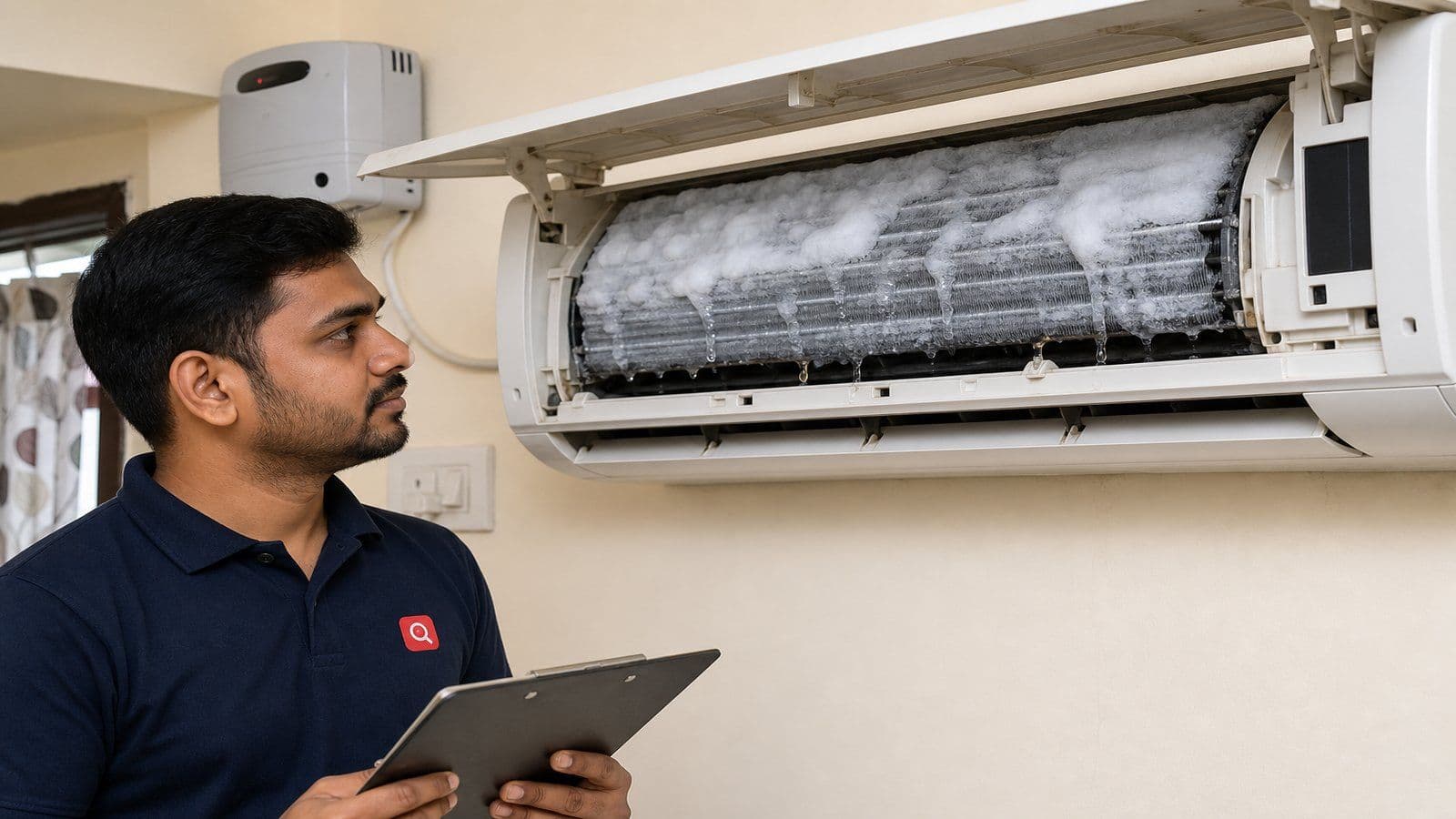
Copper pipe alone is not enough. Refrigerant inside the suction line runs as cold as 4 to 8 degrees, and on a humid Mumbai afternoon the unprotected copper will sweat heavily. That condensation drips inside walls, rots plywood, and feeds black mould.
Insulation Material
The industry standard is closed-cell nitrile rubber, sold under brand-neutral names like elastomeric foam insulation. Closed-cell means each air pocket is sealed, so the foam does not absorb water. Open-cell foam (cheaper, sometimes substituted) absorbs water by the second monsoon and becomes useless.
Wall Thickness
The minimum for residential split AC suction lines is 6 mm. For long runs over 10 metres, hot cities like Delhi, Ahmedabad and Jaipur, or top-floor installs, upgrade to 9 mm or 13 mm. The liquid line also requires insulation. Skipping it is a false economy.
Outdoor UV Wrap
Black nitrile foam is not UV stable. Direct sunlight destroys it within 9 to 14 months. Any section of pipe outside the wall must be wrapped with a UV-resistant outer wrap, white PVC or aluminium-foil tape, clamped at top and bottom of each outdoor section to prevent rainwater ingress.
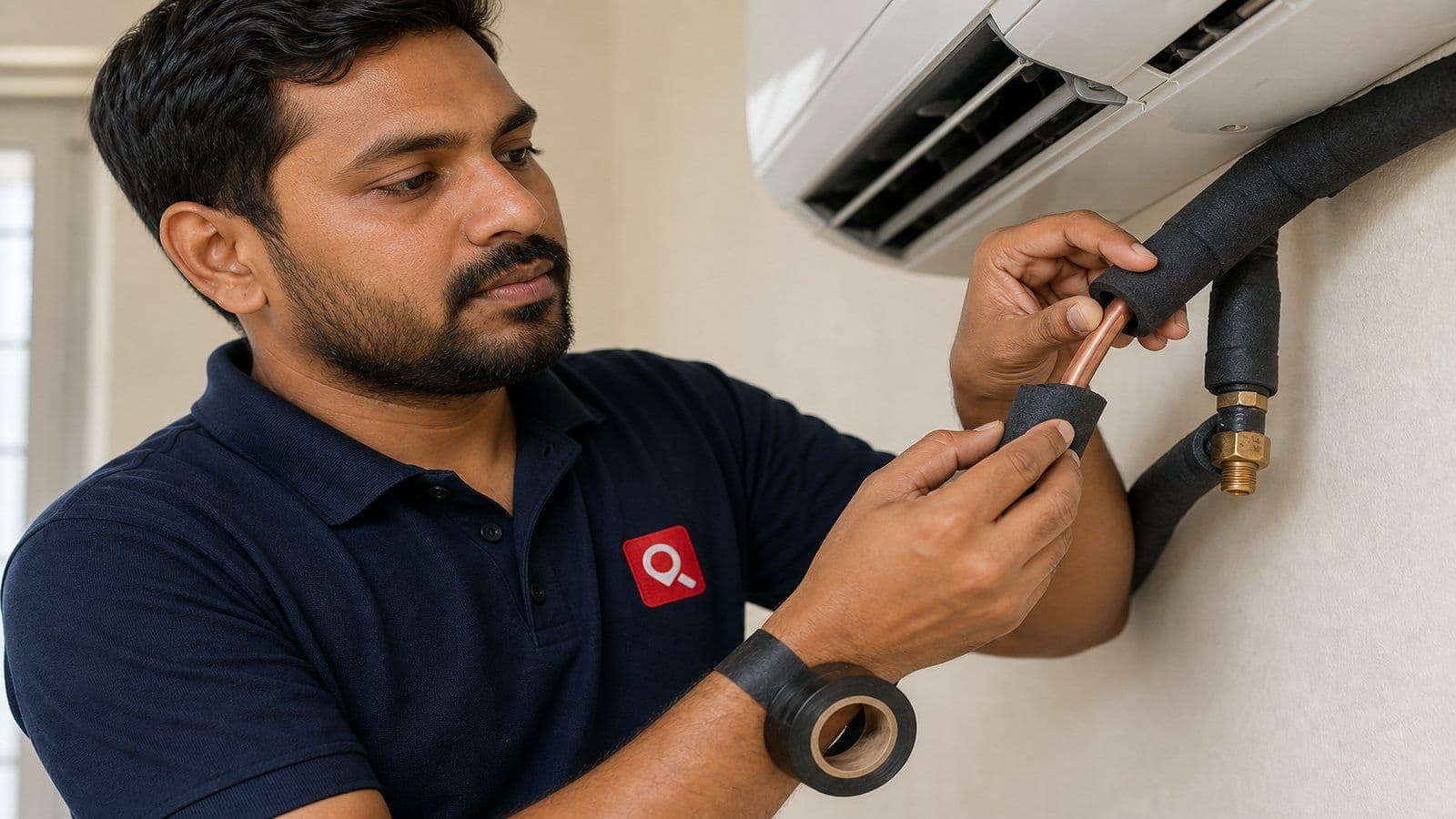
Photo: Installer wrapping nitrile insulation on suction line
Joint Patches
The most common insulation failure is the gaps at joints. Where the foam is cut to fit a flare connection or wall penetration, the installer must butt-join the ends with adhesive tape and seal them. Bare copper at a joint sweats, drips inside the trunking, and eventually presents as a damp patch on the wall.
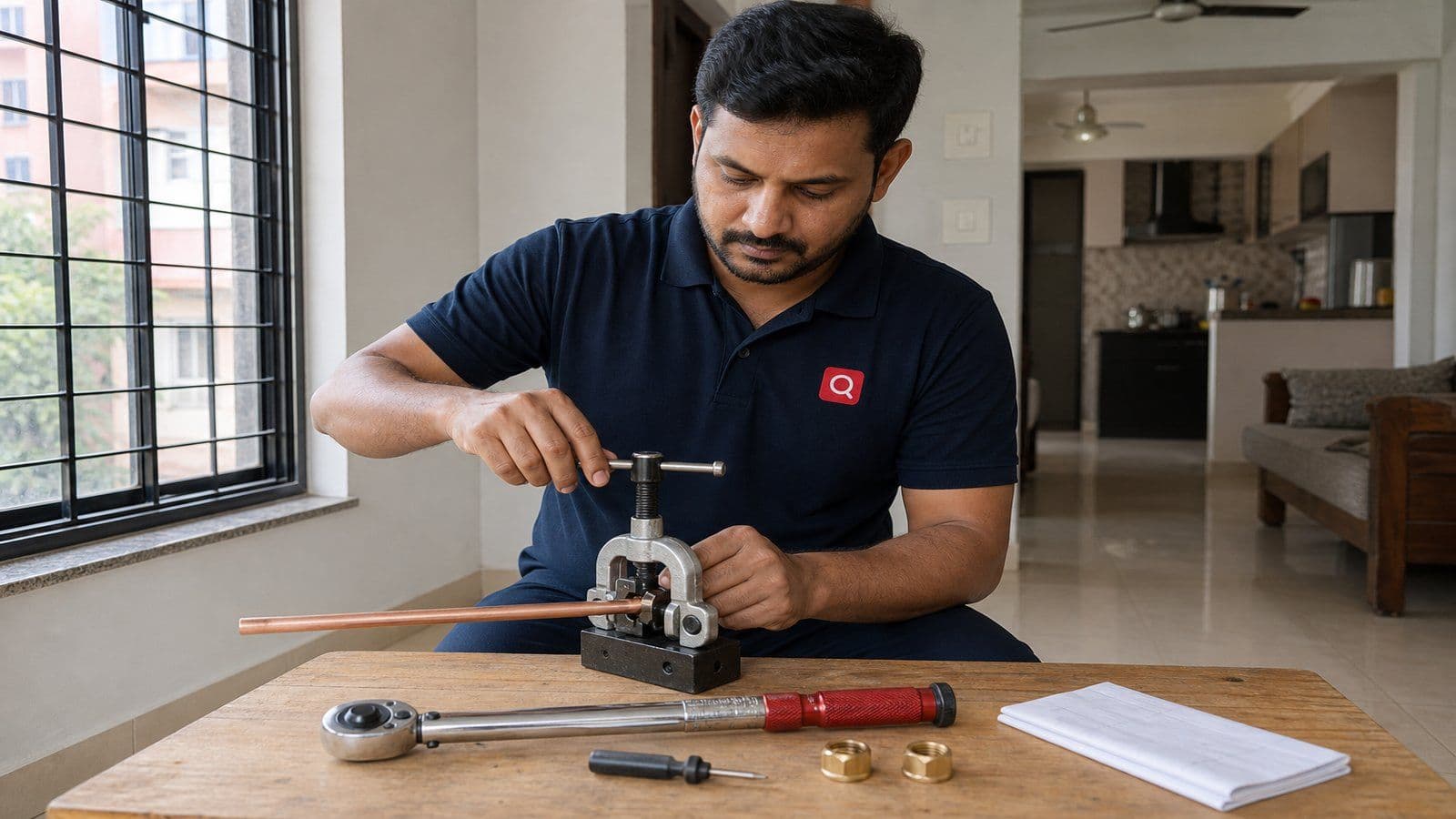
Photo: Technician creating a 45 degree flare on suction line
Pipe Length and Its Impact on Cooling
The standard split AC box includes 3 to 4 metres of pre-flared copper, two flare nuts, basic insulation and a drain hose. Pipe runs longer than 4 metres incur an extra-pipe charge of ₹350 to ₹650 per metre depending on gauge and insulation tier, plus a small labour premium for brazing the extension joint.
Why Length Matters
Longer pipe runs increase refrigerant volume, pressure drop in both directions, and heat exchange with the surrounding wall. All three reduce delivered cooling capacity.
Capacity loss begins around 10 metres. Between 10 and 15 metres, the loss is small (under 5 percent). Beyond 15 metres, the loss accelerates and the system requires a small refrigerant top-up to restore rated capacity.
Beyond 20 to 25 metres the OEM warranty often becomes void unless the installer follows an extended-run procedure with liquid line oversizing and an oil-return calculation.
Vertical Lift Limit
Every split AC has a vertical lift limit, the maximum height difference between indoor and outdoor units. Most residential 1 to 2 ton splits cap at 5 to 10 metres of lift. Beyond that the compressor cannot return oil to the crankcase reliably and the unit fails within 18 months.
High-rise installs that breach this limit should be refused rather than fitted incorrectly.
Pre-Routing During Construction
A common cost-saver in new construction is to pre-route copper inside the wall during the civil work phase.
The Press Information Bureau (PIB) and Ministry of Power (MoP) energy advisories recommend this practice because it allows pipe to run inside conduit with proper insulation, no surface trunking, and the freedom to relocate the outdoor unit later.
The Indian Society of Heating, Refrigerating and Air Conditioning Engineers (ISHRAE) residential design guidance also recognises this approach as the lowest-defect installation path, with the conduit centre routed along the shortest dry-wall corridor.
The Central Electricity Authority (CEA) wiring rules apply to the parallel power-cable conduit run alongside. The catch is that pre-routed copper must match the largest AC tonnage the room may ever use, usually 1/4 inch plus 1/2 inch for a future 1.5 ton.
Get quotes from verified, top-rated AC Service & Repair pros in Delhi.
Owners almost always underestimate the run when they tell us pipe length on the phone. They remember the wall but forget the corner, the parapet, and the bracket offset on the outdoor side. We add 1.5 to 2 metres to whatever the customer quotes us, and we still measure again on site before cutting. Capacity loss between 10 and 15 metres is invisible at install but very visible on the August electricity bill.
Brazing Versus Flaring
Two joining techniques are used on residential AC copper. Flaring uses a tapered tool to expand the pipe end into a 45 degree cone that mates with a flare nut on the unit's service valve. Brazing uses a torch and silver-bearing filler rod to permanently fuse two copper pieces together.
Flared Joints at Unit Connections
Every OEM split AC ships with flare nuts on the indoor and outdoor service valves. The pipe end is flared on site and the flare nut is torqued to manufacturer specification (typically 14 to 18 Nm for 1/4 inch, 33 to 42 Nm for 1/2 inch). A flared joint can be undone for service and is rated for the unit's working pressure.
A correctly made flare requires a clean perpendicular cut, deburred inside and outside, and a calibrated flaring tool. Over-flared joints crack; under-flared joints leak.
Brazed Joints on Extensions Only
Brazing is correct in one scenario: joining an extension length of pipe to the factory stub when the run exceeds 4 metres. The brazed joint is permanent and leak-resistant. After brazing, a vacuum pump removes air and moisture from the system, and only then is the refrigerant released through the service valves.
An installer who brazes the unit-end connection has either hidden a damaged factory flare or avoided the responsibility of a calibrated torque wrench. Both are warranty-voiding. Insist on flared connections at both unit ends.
Common Installer Shortcuts and How to Spot Them
Pipe and insulation account for ₹2,500 to ₹6,000 of a typical 1.5 ton split install. That margin is where corner-cutting hides.
Undersized Pipe
The installer arrives with 1/4 inch plus 3/8 inch copper for a 1.5 ton install when spec calls for 1/4 inch plus 1/2 inch. The substitution is invisible behind the trunking. Detect by demanding the BIS mill certificate before install, and by measuring the visible copper at the outdoor unit with a vernier.
Sub-Specification Gauge
Plumbing copper of 22 or 24 gauge (under 0.5 mm wall) is sometimes substituted for 18 gauge refrigeration copper. Detect by feel (plumbing copper bends too easily) and by certificate (refusal to produce a BIS IS 191 certificate is the clearest red flag).
Missing Insulation at Joints
The cut ends of the insulation foam are left bare at flare connections, elbow turns, or wall penetrations. Visible during install. After the trunking goes on, the gaps disappear. Insist on inspecting every joint before the cover is fitted.
No UV Wrap Outdoors
Black nitrile foam sits exposed on the balcony section. Within 12 months the foam crumbles, falls off, and the copper sweats freely. Insist on white PVC or foil wrap on every outdoor inch of pipe.
Kinks at Corners
Copper bent past its minimum radius forms a kink that permanently restricts flow. A proper installer uses a tube bender or pre-formed elbow fittings. A rushed installer bends by hand and accepts the kink. Inspect every bend before insulation goes on.
Get quotes from verified, top-rated AC Service & Repair pros in Delhi.
Generic Plumbing Copper
Buying copper from a generic hardware shop instead of an HVAC supplier is the root cause of most of the above. Saving ₹300 to ₹600 on the pipe creates a ₹14,000 problem in 18 months.
>Expert Insight from Amit Patel: "On every install assessment we do in our ProNearMe network, the technician brings a vernier calliper, a torque wrench, and a written BIS specification sheet. Customers are sometimes surprised when we measure the supplied copper at the start of the job. It takes 90 seconds.
It catches the wrong-gauge or wrong-size substitution before any cutting begins. We refuse jobs where the customer has pre-bought plumbing copper from a hardware shop, because we will not warrant the install. The five minutes of awkward conversation up front saves a five thousand rupee callback later."
>
> *Amit Patel, HVAC and Cooling Specialist*
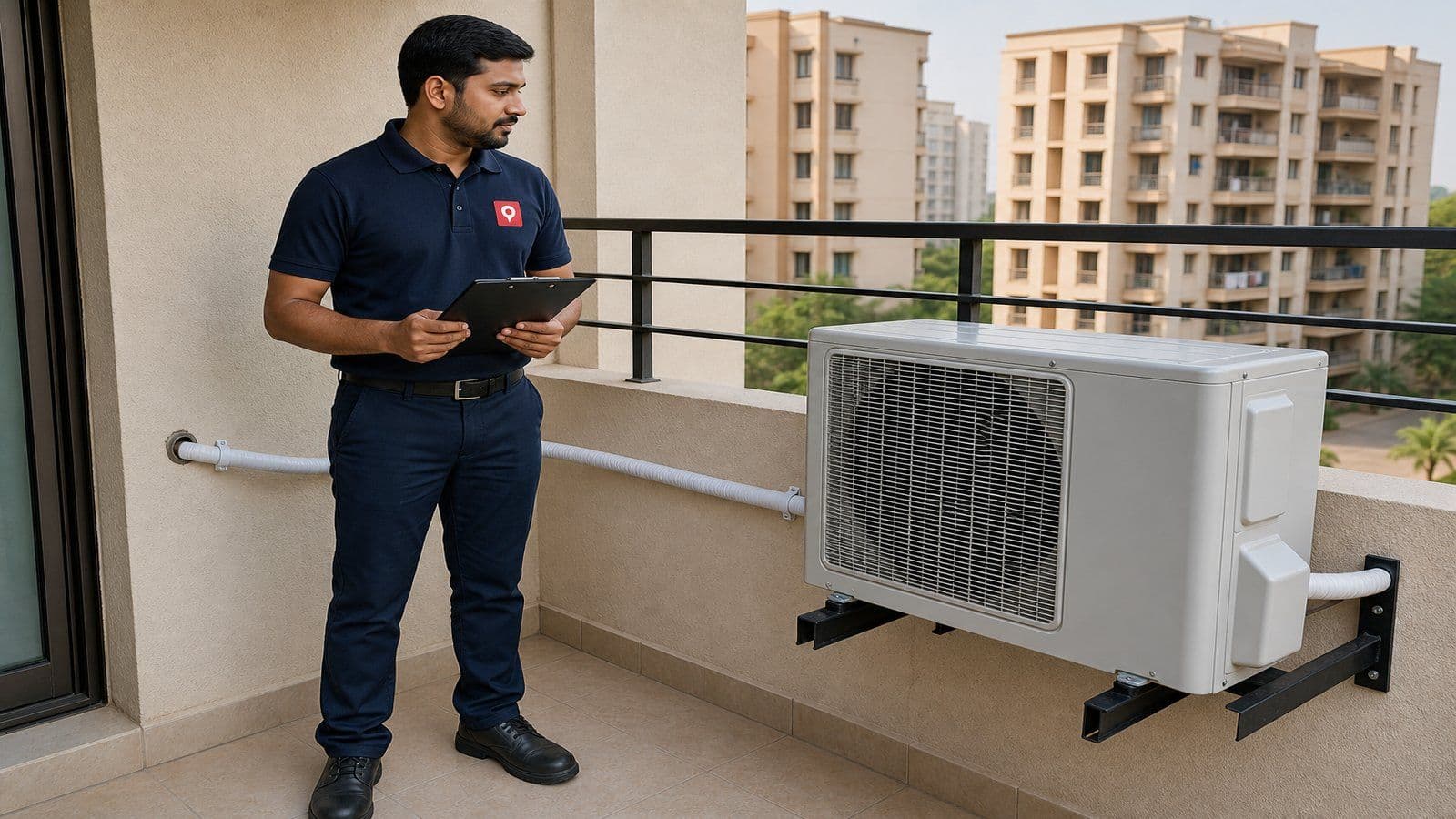
Photo: Outdoor copper pipe section with proper UV wrap
2026 Pricing Per Metre
Pipe pricing in India varies modestly by region, more by gauge and insulation tier, and most of all by whether you buy through a verified HVAC supplier or a generic hardware shop. The figures below are typical residential rates exclusive of 18 percent GST.
| Specification | Per Metre (₹) | Notes |
| 1/4 inch refrigeration-grade, 18 gauge, 6 mm insulation | 280 to 380 | Standard liquid line |
| 3/8 inch refrigeration-grade, 18 gauge, 6 mm insulation | 380 to 520 | Suction line 0.75 to 1 ton |
| 1/2 inch refrigeration-grade, 18 gauge, 6 mm insulation | 480 to 650 | Suction line 1.5 ton |
| 5/8 inch refrigeration-grade, 18 gauge, 6 mm insulation | 620 to 820 | Suction line 2 ton |
| 16 gauge premium (any size) | Add ₹120 to ₹180 | Long runs over 15 m |
| 9 mm insulation upgrade | Add ₹60 to ₹110 | Hot cities, top-floor installs |
| UV-resistant outer wrap | Add ₹40 to ₹80 per metre | Mandatory on outdoor sections |
| Flare nut pair (factory grade) | 80 to 140 | Per connection |
| Brazing rod (silver-bearing) | 250 to 450 | Per joint, materials only |
Total extra-pipe cost on a 1.5 ton install with an 8 metre run (4 metres beyond the supplied stub) typically lands in the ₹2,400 to ₹3,800 band including insulation, UV wrap and brazing on the extension joint.
Anything quoted below ₹1,800 for that scope deserves a second look, the saving usually comes off the pipe spec, the insulation thickness, or the UV wrap.
DIY Versus Hire a Professional
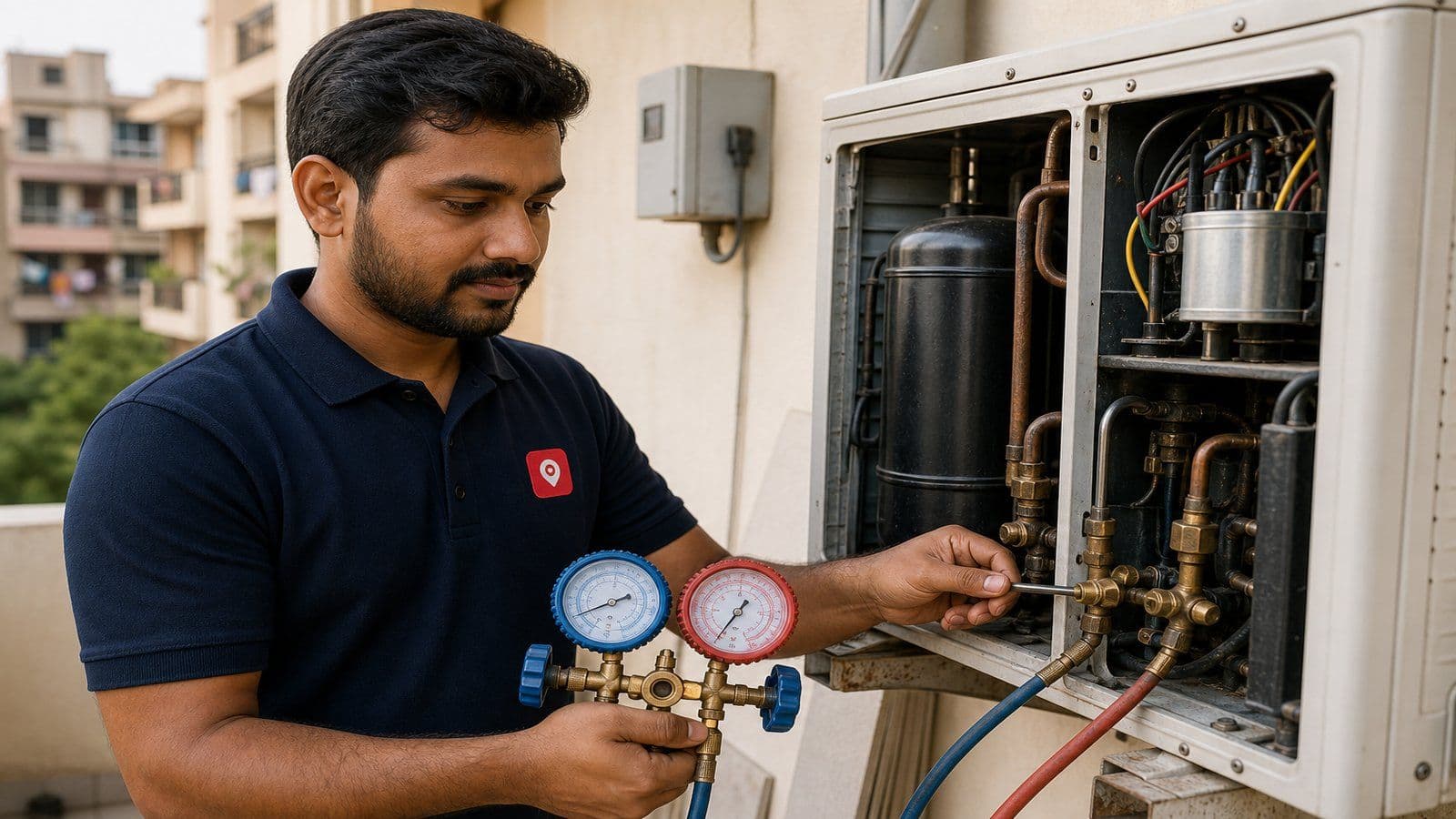
Copper pipe work on a split AC is one of the few residential tasks where DIY is almost never appropriate. A flaring tool that produces a leak-tight joint costs ₹3,500 to ₹8,000. A vacuum pump capable of pulling and holding the 500 micron vacuum required before refrigerant release costs ₹6,500 to ₹14,000.
A manifold gauge set with the right ports for R32 costs ₹2,500 to ₹4,500. The full DIY tool kit lands near ₹16,000 before any pipe is cut, roughly the cost of two professional installs.
Beyond the tools, MoEF&CC rules under the Kigali Amendment require NSDC certification for any refrigerant handling, and releasing refrigerant during a DIY mistake is a notifiable environmental offence.
For anyone building or refitting an apartment, the cleanest path is to pre-route copper inside the wall during the civil work phase, sized for the largest AC tonnage the room may ever take. For broader construction-phase timing see new AC day of setup checklist.
Case Study from a Powai High-Rise
Mrs. Priya Iyer, a customer in Hiranandani Gardens, Powai, called us in April 2025 after her 1.5 ton inverter split, only 14 months old, started under-cooling and dripping water inside the wall. The brand's service team had visited twice, declared the AC fault-free, and refused further visits.
Her electricity bill had risen ₹1,800 a month and a faint damp patch had appeared on the bedroom wall.
Our technician pulled the trunking off. The pipe was 1/4 inch plus 3/8 inch copper, sized for a 1 ton AC and dramatically undersized for the fitted 1.5 ton. The extension joint had been brazed with hardware-shop brass rod instead of silver-bearing refrigeration rod. Insulation was bare at three joint locations, all soaked.
The 4 metre balcony run had no UV wrap and the foam had crumbled. Wasted capacity measured at the supply louvre was around 22 percent.
We replaced the entire run with correctly sized 1/4 inch plus 1/2 inch refrigeration-grade copper, 18 gauge, with full 6 mm insulation, silver-brazed extension joint, properly torqued flare connections at both units, and white PVC UV wrap on the balcony section. Total job ₹8,400 inclusive of GST.
The AC has run at full rated capacity for the 14 months since. The original install had saved the society ₹1,400 on the pipe and cost Mrs. Iyer roughly ₹18,000 in repairs and inflated power bills. Pipe is not the place to save money on an AC install.
For related pre-install decisions, see our guides on split AC installation step by step, outdoor unit placement, bracket selection and installation mistakes checklist.
For full budget planning see the AC installation cost breakdown.
Conclusion
Copper pipe is the quiet backbone of every split AC install. The cost looks small on the quote, ₹2,500 to ₹6,000 on a typical 1.5 ton fit, but its specification controls whether you actually get the cooling you paid for.
The right pipe is refrigeration-grade copper certified to BIS IS 191, sized to the unit's tonnage from the OEM manual, wrapped in 6 mm closed-cell nitrile insulation, UV-protected on every outdoor inch, flared at the unit ends and silver-brazed only on mid-run extensions.
Most under-cooling complaints on new splits trace to one of these specs being violated for a saving of a few hundred rupees on the install.
Two practical habits protect any owner. Insist on the BIS mill certificate before any copper is cut. Inspect every joint, bend and outdoor section before the trunking goes on. Both habits take a combined 15 minutes during the install visit and add nothing to the cost.
They prevent the most expensive type of failure: the one that hides behind a finished wall for 18 months and presents as both a damp patch and a 20 percent capacity loss when you finally find it.
Disclaimer
All pipe and labour cost ranges in this guide are typical residential figures across major Indian cities and exclude GST, currently 18 percent on AC installation parts and services.
Actual costs vary by city, supplier, gauge upgrade, insulation tier, vertical lift, and installation access difficulty (high-rise roof-mount installs and extended runs over 15 metres carry significant premiums).
We strongly recommend hiring only NSDC-certified or OEM-trained technicians for any copper pipe and refrigerant work, since these involve regulated environmental compliance under the Kigali Amendment and require specific torque and vacuum equipment to produce a leak-tight install.
ProNearMe does not endorse any specific AC brand or copper supplier and the specifications in this guide apply across all residential split air conditioner manufacturers.
Sources & References
- Bureau of Indian Standards IS 191 Copper and Copper Alloy Tubes for Refrigeration and Air Conditioning
- Bureau of Energy Efficiency Air Conditioner Standards and Labelling Programme
- Ministry of Environment, Forest and Climate Change Ozone Cell and Kigali Amendment Implementation
- National Skill Development Corporation HVAC Technician Qualification Pack
- Indian Society of Heating, Refrigerating and Air Conditioning Engineers Residential HVAC Installation Guidelines
- Press Information Bureau Energy Efficient Air Conditioning Practices Advisory
- Central Electricity Authority Wiring and Safety Regulations for Domestic Installations
- Ministry of Power Energy Conservation Building Code Residential
- National Building Code of India Part 8 Building Services HVAC Section
Amit worked as an AC technician for 6 years in Ahmedabad before transitioning to technical writing. He holds a diploma in Refrigeration and Air Conditioning from ITI Ahmedabad and understands the difference between what AC companies promise and what actually happens on the ground. His articles break down complex technical topics into plain language that any homeowner can follow. He tests every tip he writes about in his own home first.