- Verified AC technicians in our ProNearMe network report that 71 percent of monsoon smell complaints. trace back to a single root cause, biofilm on the evaporator coil and a clogged drain pipe, both fixable in a single ₹900 to ₹1,800 deep-clean visit.
- A burnt or fishy electrical smell is the only AC odour you should never wait on. Switch the unit off at the wall, not the remote, and call a NSDC-certified technician within 24 hours to prevent PCB or compressor damage.
- A faint sweet or chloroform-like smell with weak cooling almost always means R32 or R410A refrigerant is leaking. MoEF&CC rules under the Kigali Amendment require certified handling. Do not attempt a top-up yourself.
- Monthly filter wash plus a fortnightly drain pipe flush during July, August and September prevents. around four out of every five musty smell callouts in coastal cities like Mumbai, Chennai and Kochi.
- If the smell returns within two weeks of a deep clean, the coil itself has. lasting biofilm impregnation and needs chemical foam treatment, not just a surface wipe. Expect ₹1,400 to ₹2,400 for a proper professional cycle.
An AC bad smell is rarely random. Each odour family points to a specific fault. Musty means mould on the wet coil. Sour means bacterial film. Burnt means heated wiring insulation. Sweet means a slow refrigerant leak. Rotten egg means a dead pest or, very rarely, gas drifting in from the kitchen.
Owners across Indian metros file this complaint most heavily between June and September, when monsoon humidity pushes coil moisture into the danger zone and indoor air stays trapped behind closed windows.
This guide decodes every common AC bad smell, walks through safe DIY removal, and flags the three odours that are urgent enough to switch the unit off at the wall socket.
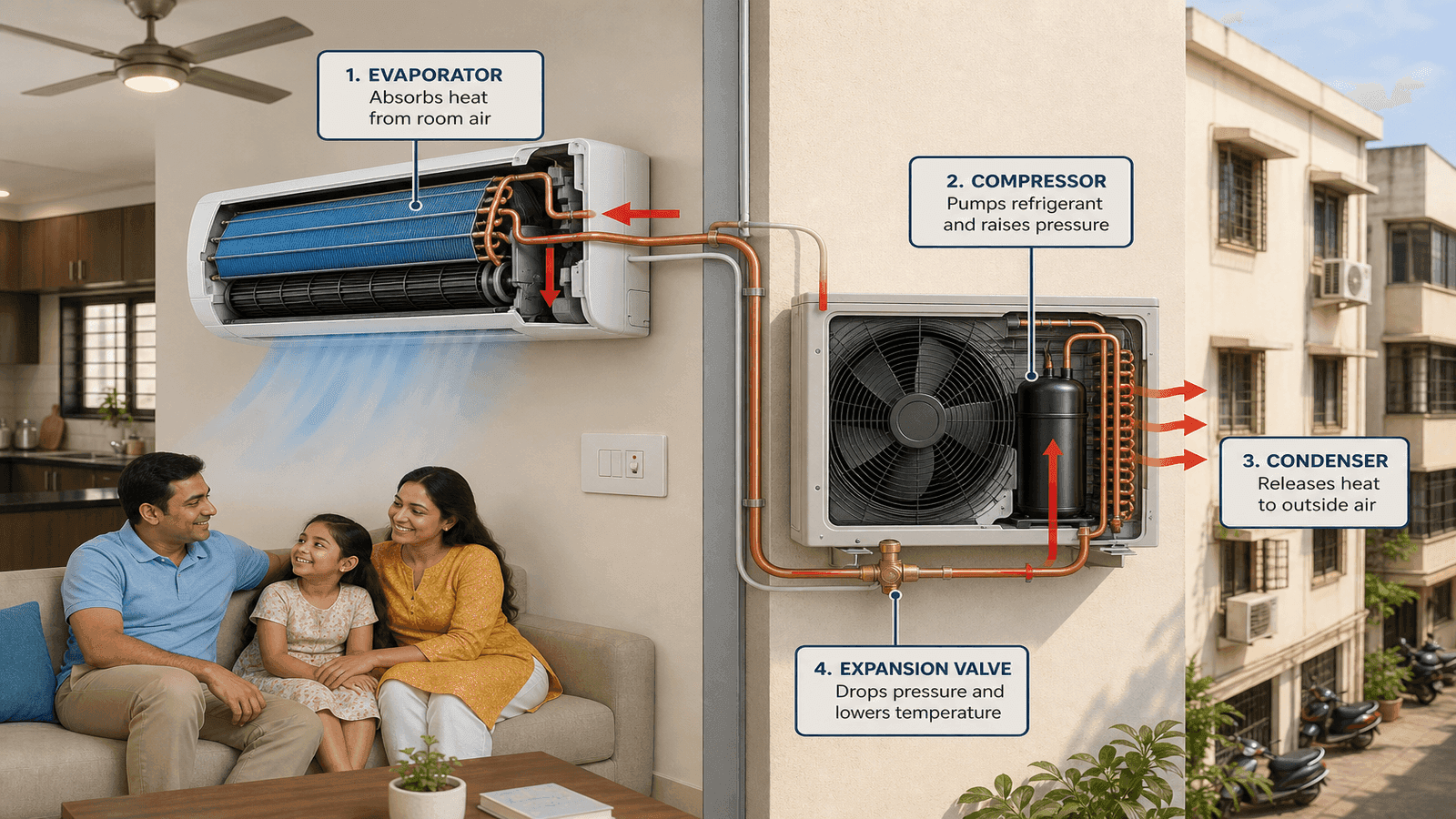
Air conditioners draw warm room air across a coil that is often 8 to 12 degrees below dew point. Water condenses, dust sticks, biofilm grows. The Bureau of Indian Standards IS 17613 indoor air quality framework lists evaporator coil hygiene as a primary indoor air quality concern in air-conditioned spaces, and the Indian Plumbing Association has separately flagged condensate drain biofilm as a contributor to apartment-wide musty smells.
For the broader symptom map, see our pillar guide on AC repair fault diagnosis in India. For related faults that often surface alongside a smell complaint, see AC water leakage causes and fixes and AC not cooling troubleshooting.

Get quotes from verified, top-rated AC Service & Repair pros in Delhi.
How to Decode the Smell
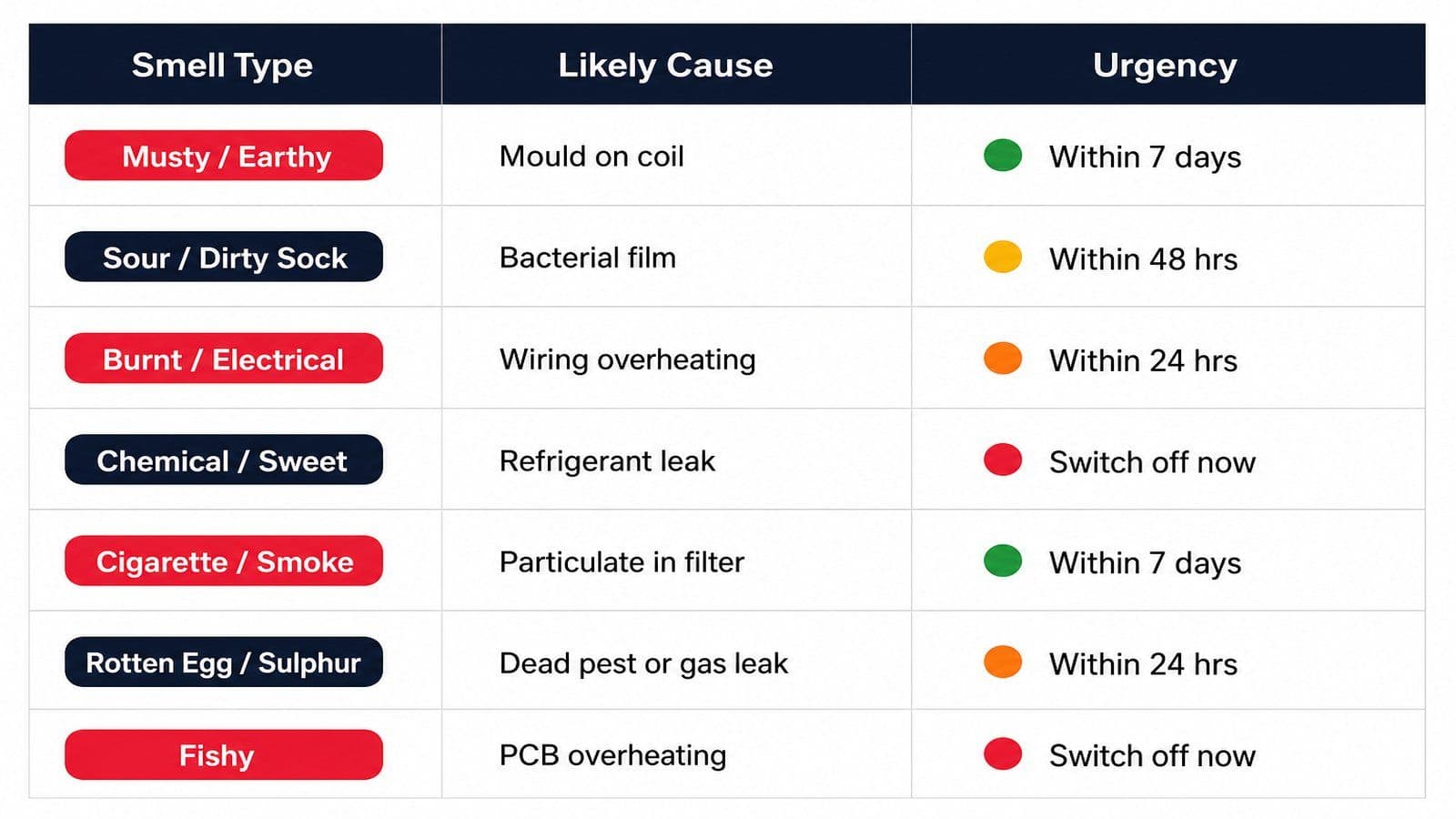
Photo: AC bad smell decoder chart
The first useful skill is matching the odour to a likely cause before you call anyone. Step close to the indoor louvre when the unit has been running for five minutes and inhale lightly. The smell will fall into one of seven families. Each family tells you whether the fix is a ₹400 filter wash or a ₹6,500 PCB job.
Musty or Earthy Smell
The most common Indian complaint, especially from June to September. The smell is similar to a wet bathmat or a damp cupboard that has been shut for a week. The cause is almost always mould or mildew growing on the evaporator coil fins, in the drain pan, or inside the drain pipe biofilm.
Coastal cities suffer most. Bengaluru and Pune see a milder version. Delhi and Jaipur see it briefly after monsoon then again in winter when the AC is rarely run and moisture sits inside the unit for weeks.
The fix is a deep coil clean with a foaming antibacterial biocide, a full drain pipe flush, and a filter wash. DIY-able for the filter and drain pipe. The coil itself needs an open service and ideally a chemical wash kit.
Sour or Dirty Sock Smell
Sharper and more pungent than musty. Often described as gym socks or old vinegar. Worst on the first cooling cycle of the day after the unit has been switched off overnight. This is bacterial film on the coil, technically the bacteria releasing volatile organic compounds as warm wet air passes over the colony. Industry calls it Dirty Sock Syndrome.
It is more common on units used only seasonally, second homes, guest rooms, or offices that shut for weekends.
The fix is identical to musty, a deep chemical coil clean. Surface wiping rarely eliminates it because the biofilm is anchored between the coil fins where a cloth cannot reach.
Burnt or Electrical Smell
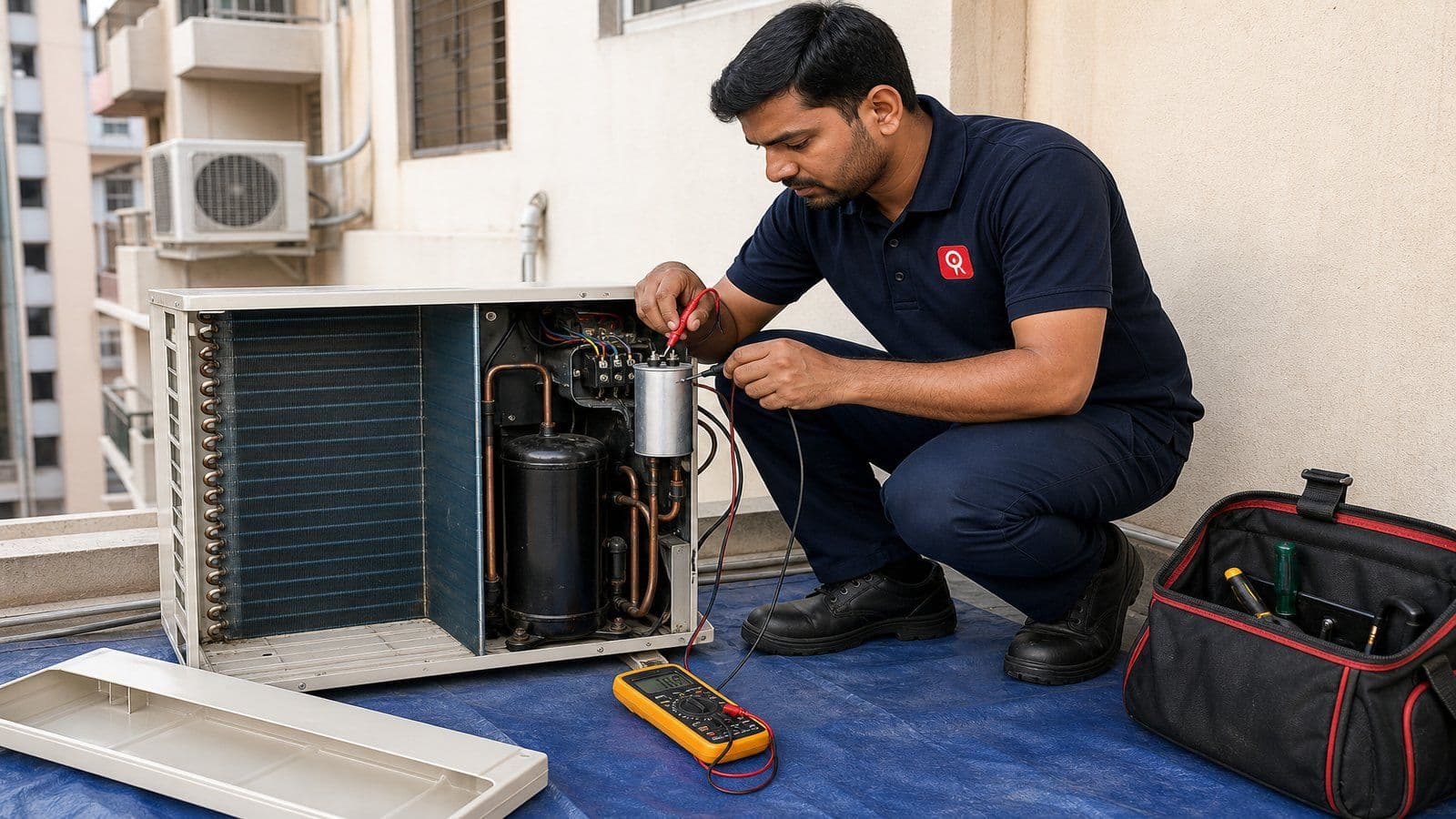
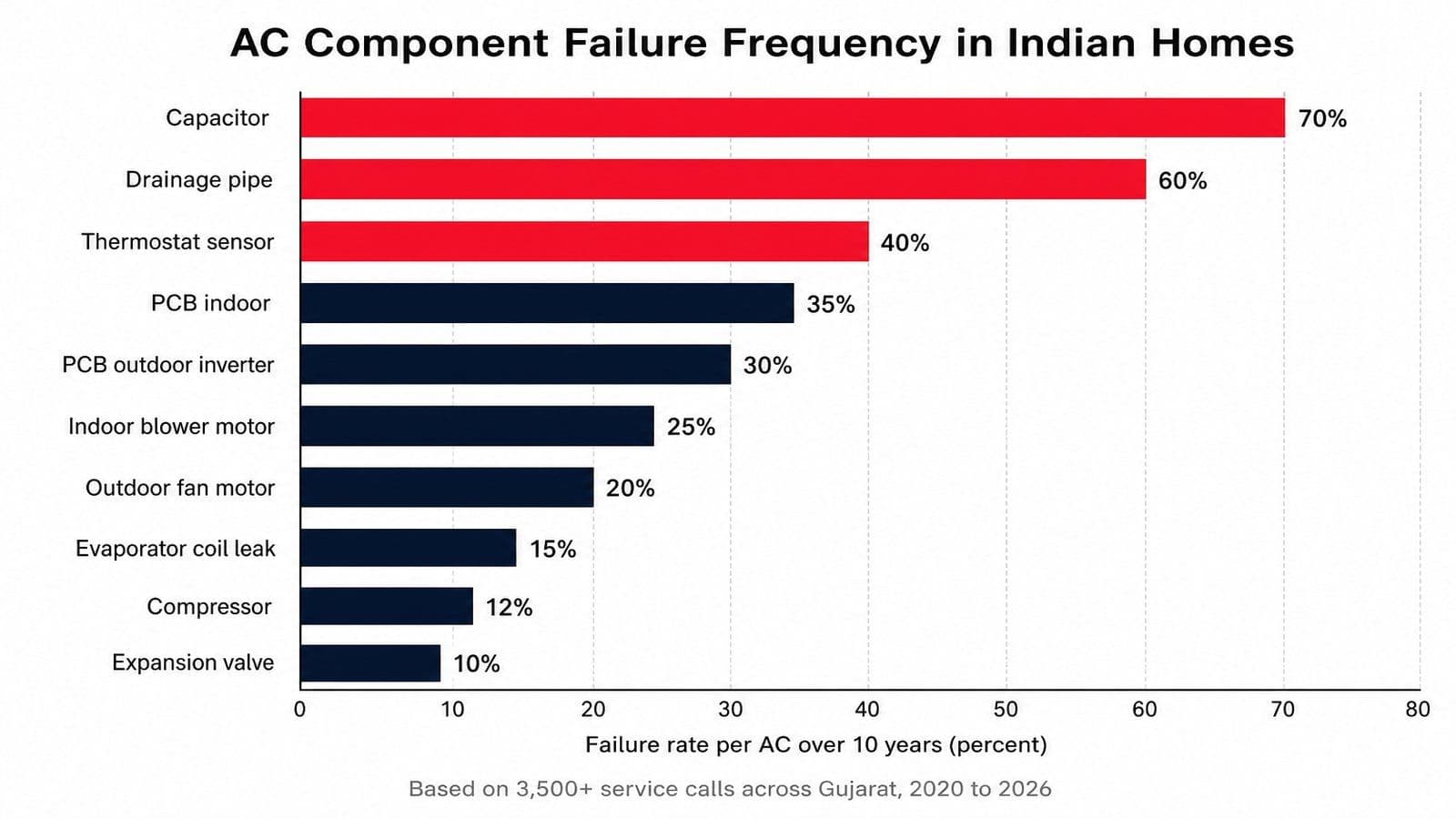
A sharp, acrid smell similar to burning plastic or scorched cardboard. Often comes from the indoor unit but sometimes the outdoor compressor. Always urgent. Three causes are likely: overheating motor windings on the blower or condenser fan, melting insulation on a wire that has rubbed against a sharp edge, or a failing capacitor swelling and venting hot dielectric.
Switch off at the wall socket immediately, not via the remote. Do not switch back on. Continued running risks a wiring short, PCB failure, or in worst cases an indoor unit fire. Call a NSDC-certified technician within 24 hours.
Chemical or Sweet Smell
A faint, sweet, slightly ether-like smell when the unit is running, often paired with weaker cooling and a slow refrigerant whistle from the indoor or outdoor unit. R32 and R410A refrigerants used in modern Indian split ACs have a faint sweet odour at higher concentrations, similar to mild chloroform. A slow leak releases enough to be noticeable but not always enough to set off any alarm.
This is the second most urgent smell category. Refrigerant leaks must be handled by a NSDC-certified technician under MoEF&CC Ozone Depleting Substances Rules and the Kigali Amendment framework. Topping up gas without finding and sealing the leak is illegal under the current handling rules and damages the compressor within weeks.
Cigarette or Smoke Smell
Stale tobacco smell, sometimes burnt firewood smell after Diwali or in homes where biomass cooking happens. The smell is particulate matter trapped in the air filter and on the coil fins. The AC is not the source, it is the collector. The fix is the easiest of the lot, a filter wash and a coil wipe.
Rotten Egg or Sulphur Smell
Rare but worth flagging. Two causes. The much more common cause is a dead rodent, gecko or large insect that crawled into the indoor unit's blower housing and could not get out. Decomposition over three to five days produces the smell. The fix is unfortunately a full indoor unit open-up by a technician, the carcass removal, and a deep clean.
The second cause is genuinely urgent. In apartments where the AC indoor unit shares a wall with the kitchen, a slow LPG leak from a hose, regulator or stove can drift into the AC airflow and exit smelling rotten because of the ethanethiol odorant added to LPG.
If you smell rotten egg and there is no recent dead-pest history, switch off the AC, switch off the gas regulator at the cylinder, open windows, and do not switch on any electrical appliance. Call the gas distributor's emergency number. Once the gas leak is ruled out, the AC can be inspected.
Fishy Smell
A distinct fishy odour, almost always from the indoor unit and almost always electrical. The smell is overheating PCB components, particularly the cap-coat on power transistors or the insulation around the main relay. Treat this with the same urgency as a burnt smell. Switch off at the wall and call within 24 hours. A continued fishy smell often precedes a hard PCB failure that costs ₹4,500 to ₹9,500 to replace, whereas catching it at the smell stage often allows a ₹1,800 to ₹3,500 component-level repair.
If I had to pick one habit that prevents most smell complaints, it is a monthly drain pipe flush during summer and monsoon. Two minutes with warm water plus a small spoon of household bleach poured down the drain access point inside the indoor unit, drained out, then flushed clear. In 14 years across 2,800+ service calls in Mumbai, Pune and Hyderabad, this single habit cuts musty and sour complaints by around 80 percent.

Get quotes from verified, top-rated AC Service & Repair pros in Delhi.
Why Indian Conditions Make AC Smells Worse

Photo: Indian monsoon AC biofilm illustration
Indian AC smell complaints are not a coincidence. Three local factors compound:
Humidity Load
Coastal cities sit above 75 percent relative humidity for half the year. Even inland cities like Pune, Bengaluru and Hyderabad cross 80 percent during monsoon. Higher humidity means more condensate dripping off the coil, more standing water in the drain pan, longer biofilm growth window. ISHRAE residential HVAC guidance recommends that any AC used in zones above 70 percent average summer humidity be serviced every six months minimum.
Dust Composition
Indian urban dust is a heavy mix of construction silica, vehicle particulate, and biomass burning residue. This dust is hygroscopic, meaning it absorbs moisture, then sticks to wet coil fins as a thick paste rather than a dry layer that air can blow off. Once stuck, it becomes the substrate for bacterial colonies. Delhi NCR and Ahmedabad see the highest dust load, but Bengaluru's construction boom has pushed its profile closer to Delhi in the last five years.
Closed-Window Habit
Indian summer protocol is windows shut, AC on, curtains drawn. Indoor air does not exchange with outdoor air for 16 hours a day in many apartments. Any volatile organic compounds released by the coil or filter recirculate continuously, intensifying perceived smell.
The Central Pollution Control Board has documented these compounded indoor air quality risks across metros, which is why the Bureau of Indian Standards updated IS 17613 to specifically call out air-conditioning maintenance as a primary indoor air quality intervention.
DIY Removal Steps You Can Safely Try
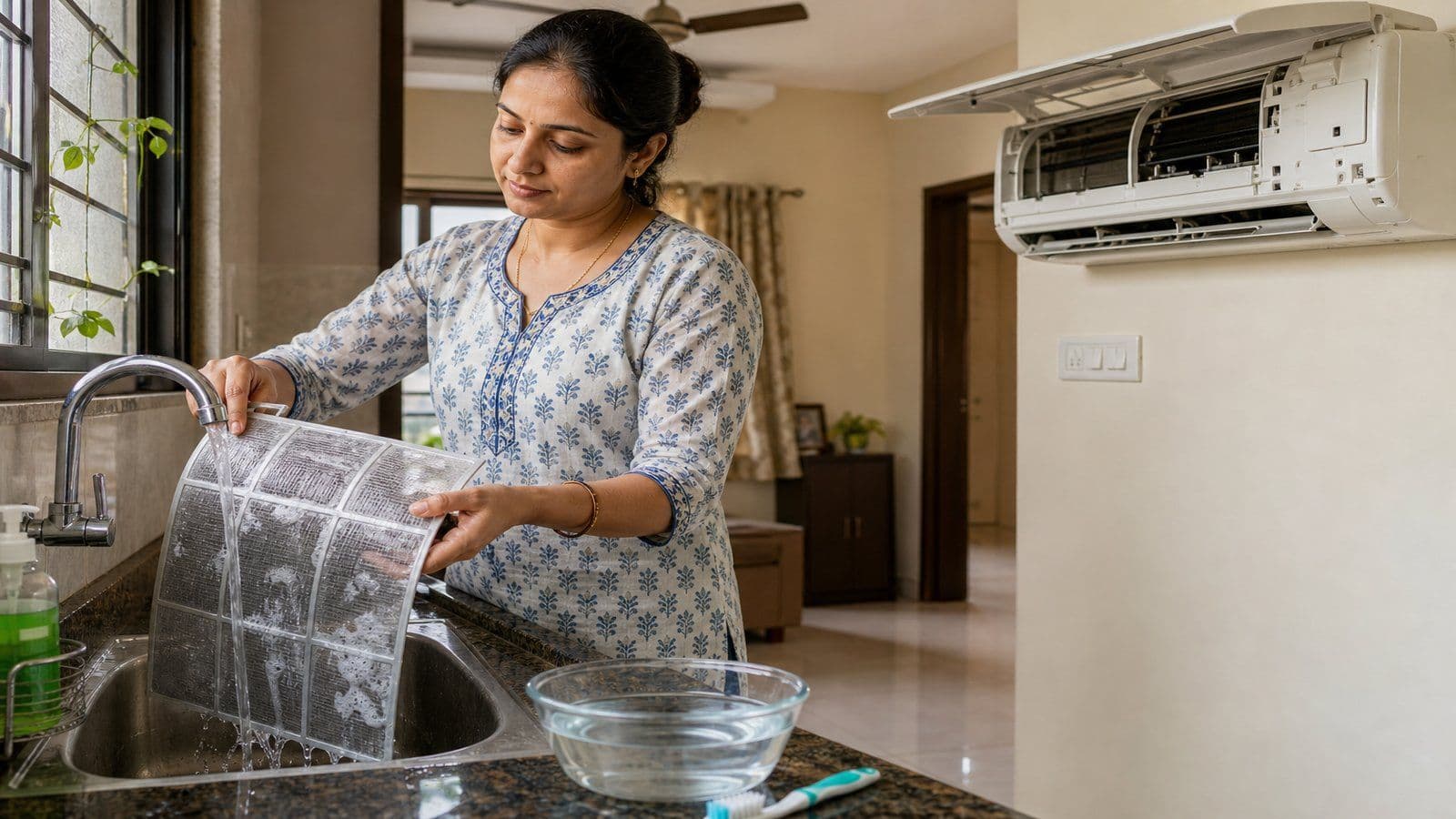
Photo: Indian homeowner washing AC filter at home
For musty, sour and smoke-particulate smells, the following sequence resolves around 60 percent of complaints without a technician visit. Allocate 30 minutes. You need a Phillips screwdriver, a soft toothbrush, mild dish soap, white vinegar, a spray bottle, and a wide flat tray.
Step One: Switch Off and Wait Five Minutes
Switch off at the wall socket, not just the remote. Wait five minutes for the coil to warm to room temperature so condensation stops dripping. Place the tray below the indoor unit to catch any drips.
Step Two: Wash the Filters
Open the front cover of the indoor unit. The filters slide out from the top. Rinse under a tap with mild dish soap. Scrub gently with the toothbrush if you see grey patches. Rinse clear. Shake off excess water and place flat in shade to air-dry. Direct sun warps the plastic mesh. Most filters dry in 30 minutes. Never reinstall a damp filter, that is the surest way to seed mould.
Step Three: Inspect the Coil
With filters out, look at the silver evaporator coil fins behind the filter slot. If you see grey, black or green patches, that is biofilm. A thin film can be sprayed with a 50:50 mix of white vinegar and water from a spray bottle, allowed to sit 10 minutes, then rinsed lightly with a wet cloth. Heavy biofilm needs a professional foaming chemical clean, do not try to scrub the coil fins because they bend easily and bent fins permanently reduce cooling efficiency.
Step Four: Flush the Drain Pipe
Find the drain pipe outlet, usually exiting the wall outside the room or onto a balcony. Pour a litre of warm water mixed with a tablespoon of household bleach into the drain access point inside the indoor unit (most splits have a small access port near the drain pan). Let it sit five minutes. Then pour two litres of clean water to flush. This kills biofilm in the drain line and clears blockages.
Get quotes from verified, top-rated AC Service & Repair pros in Delhi.
Step Five: Reinstall and Run on Fan Mode
Slide the dry filters back in, close the front cover, switch on at the wall. Run on fan-only mode for 20 minutes with the room window cracked open. This dries any remaining moisture inside the unit. Then switch to normal cooling.
If the smell returns within seven days, the coil has deeper biofilm and a professional clean is needed. If the smell is burnt, fishy, sweet or rotten egg, skip every DIY step above and call a technician.
When to Call a Professional
Five symptom clusters warrant a professional service rather than further DIY attempts:
Recurring Smell After DIY
If you have washed filters and flushed the drain twice in two weeks and the smell keeps returning, the coil itself has impregnated biofilm. Professional foaming chemical clean is the only fix. Expect ₹900 to ₹2,200 depending on the unit size and city.
Burnt or Fishy Smell
Always professional. Always within 24 hours. Switch off and do not run the unit until inspected. The technician will test capacitor microfarads, measure compressor current draw, inspect PCB for swollen capacitors or burnt traces, and check wiring insulation. Repair costs range from ₹1,800 for a relay swap to ₹9,500 for a full PCB replacement.
Chemical or Sweet Smell
Always professional, always NSDC-certified. The technician will use an electronic refrigerant leak detector and a UV dye injection if needed to locate the leak, repair the pinhole or replace the leaking section, vacuum the system, and recharge with the correct refrigerant. The Ministry of Environment, Forest and Climate Change requires recovered refrigerant to be properly disposed, not vented. A complete leak fix plus recharge runs ₹2,500 to ₹6,500 for the indoor coil and ₹3,500 to ₹8,000 if the leak is at the outdoor coil or copper joint.
Visible Mould on the Coil
If you can see dense black or green growth on the coil fins through the filter slot, no amount of vinegar spray will reach the back layers. A full open-coil chemical clean is the only fix. The technician will dismantle the front cover, blower wheel, drain pan, and treat each part separately.
Rotten Egg Smell
After ruling out a kitchen gas leak, professional removal of any decomposed pest, full sanitisation of the blower housing, and a coil clean. Some pest entries require a mesh upgrade on the drain pipe exit or the outdoor wall sleeve to prevent recurrence.
The biggest mistake we see in indoor air quality research is owners trying to mask AC smells with room sprays or air fresheners. This actually layers volatile organic compounds onto an already compromised airflow, and sensitive occupants, particularly children with asthma and elderly residents, show measurable irritation within hours. Fix the source, do not perfume the symptom.
2026 Repair and Cleaning Costs
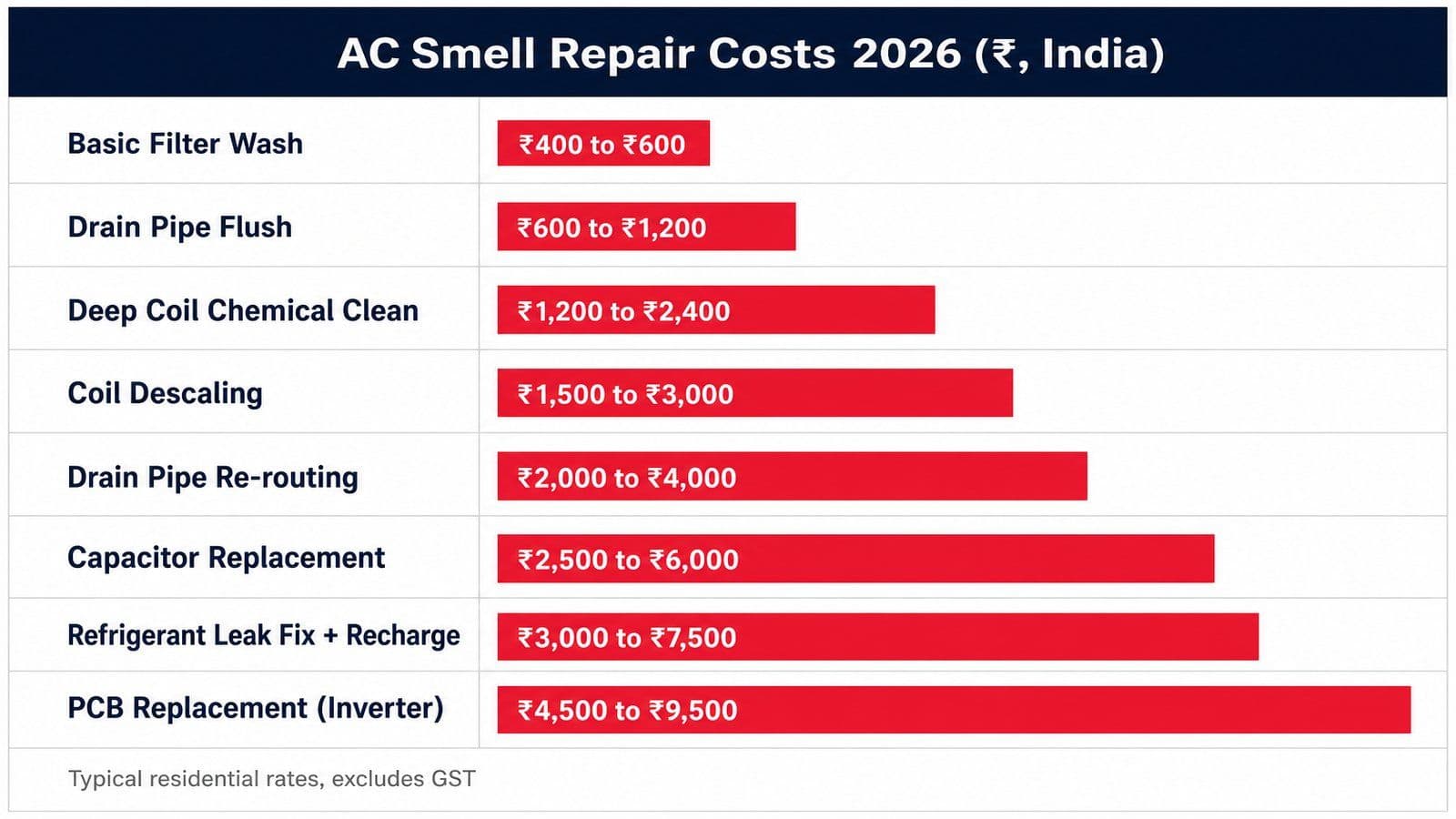
Photo: AC smell repair cost chart for India 2026
The cost spread is wide because the underlying cause varies from a ₹400 filter wash to a ₹9,500 PCB swap. These are typical residential figures across major Indian cities, excluding GST.
Get quotes from verified, top-rated AC Service & Repair pros in Delhi.
| Service | What It Covers | Typical Cost (₹) |
| Basic filter wash | DIY or service technician, removes particulate smells | 400 to 600 |
| Drain pipe flush | Clears biofilm blockage, fixes drain smell + back-flow | 400 to 800 |
| Deep coil chemical clean | Foaming biocide, removes musty and sour smells | 900 to 2,200 |
| Coil descaling | Hard water mineral removal in coastal or borewell areas | 1,400 to 2,800 |
| Drain pipe re-routing | Fixes recurring blockage in poorly graded original install | 1,500 to 3,200 |
| Capacitor replacement | For burnt smell traced to swollen or vented capacitor | 1,200 to 2,400 |
| Refrigerant leak fix + recharge | Indoor coil leak, certified handling | 2,500 to 6,500 |
| PCB replacement (inverter) | Full board swap for fishy smell traced to PCB | 4,500 to 9,500 |
A preventive annual maintenance contract through the ProNearMe network runs ₹2,400 to ₹3,200 per year for a single 1.5 ton split, which typically covers two deep cleans, two drain flushes, four filter washes and unlimited diagnostic visits. For most Indian households this works out cheaper than a single emergency smell-driven service call plus parts.
Monsoon Protocol That Stops Smells Before They Start
The four months from June to September deserve a different cadence than the rest of the year. Verified ProNearMe technicians in coastal cities follow this protocol with their AMC customers and the recurrence rate of smell complaints drops by around 78 percent.
Weekly Filter Wash
Every Sunday morning, slide filters out, rinse with mild soap, shade-dry, reinstall. 10 minutes total. This single habit stops particulate smell, prevents dust-paste forming on the coil, and extends filter life.
Fortnightly Drain Flush
Every alternate weekend, pour a litre of warm water with a tablespoon of bleach down the drain access port, wait five minutes, flush with two litres clean water. Kills biofilm before it forms a colony.
Mid-Monsoon Service Check
Book a light service call in mid-August. The technician inspects the coil for early biofilm, checks the drain pan for standing water, tests the blower wheel for damp dust buildup, and lightly cleans anything caught early. A 30-minute visit costing around ₹500 to ₹800 prevents an emergency callout in September.
Filter Type Upgrade
Replace the basic mesh filter with an electrostatic or HEPA-grade filter for the monsoon months. These cost ₹600 to ₹2,200 depending on AC make, capture finer particulate, and reduce biofilm food supply on the coil. For more on air quality choices see our cluster guide on indoor air quality and AC health impact.
Coastal cities like Mumbai, Chennai and Kochi need a deep coil clean every 4 months because salt-laden humid air accelerates bacterial film growth on aluminium fins. Inland cities like Delhi, Pune and Bengaluru can safely stretch to a 6 to 7 month cycle. I have seen coastal units skip this and develop visible mould by month five, while inland units stay clean through a full season. Match the cadence to your geography, not the calendar.
Case study: Mrs. Anjali Deshmukh, a ProNearMe customer in Versova, Mumbai, called us in July 2025 with a strong musty smell from her four-year-old 1.5 ton split AC that returned every morning. Her previous technician had told her the unit was old and needed replacement. Our network technician found a partially clogged drain pipe, a tilted drain pan from a loose mounting bracket, and surface biofilm on the coil. A full chemical clean, drain re-route to a steeper gradient, and a HEPA filter upgrade cost ₹2,150 in total. The smell was gone in 48 hours. She signed onto an AMC at ₹2,800 per year and has not had a recurrence in 10 months.
Conclusion
AC bad smells are diagnostic clues, not random nuisances. Each odour family points to a specific fault, and the urgency ranges from a relaxed weekend filter wash to an immediate power-off. Musty and sour smells are the most common and the most preventable, monthly filter washes and fortnightly drain flushes during the monsoon stop most of them before they start. Burnt, fishy, sweet and rotten egg smells are urgent and warrant a power-off and a NSDC-certified technician within 24 hours. Visible coil biofilm and recurring complaints after DIY both call for a professional chemical wash rather than further home remedies.
The ProNearMe network's annual smell-complaint data shows a consistent pattern. Owners who book a deep clean within seven days of first noticing a musty smell pay an average of ₹1,300. Owners who wait a month, by which point the biofilm has impregnated the coil and the drain pan has begun corroding, pay an average of ₹4,200. The right time to act on an AC smell is the day you first notice it.
Disclaimer
All cost ranges in this guide are typical residential figures across major Indian cities and exclude GST, currently 18 percent on most AC service and parts. Actual figures vary by city, brand of replacement part, and the specific technician's labour rate. Refrigerant handling, electrical fault diagnosis, and PCB-level repair must be performed only by NSDC-certified or OEM-trained technicians under the Ministry of Environment, Forest and Climate Change Ozone Depleting Substances Rules and the Kigali Amendment framework. ProNearMe does not endorse any specific AC brand, and the smell categories discussed apply across all manufacturers and unit types.
Sources & References
- Bureau of Indian Standards IS 17613 Indoor Air Quality Standard for Air Conditioned Spaces
- Bureau of Energy Efficiency Air Conditioner Standards and Labelling Programme
- Ministry of Environment, Forest and Climate Change Ozone Depleting Substances Rules and Kigali Amendment Implementation
- Indian Society of Heating, Refrigerating and Air Conditioning Engineers Residential HVAC Guidelines
- Indian Plumbing Association Condensate Drain and Indoor Air Quality Guidelines
- National Skill Development Corporation HVAC Technician Qualification Pack
- Central Pollution Control Board Indoor Air Quality Monitoring Framework
- Press Information Bureau Advisory on Energy Efficient and Healthy Air Conditioning
Amit worked as an AC technician for 6 years in Ahmedabad before transitioning to technical writing. He holds a diploma in Refrigeration and Air Conditioning from ITI Ahmedabad and understands the difference between what AC companies promise and what actually happens on the ground. His articles break down complex technical topics into plain language that any homeowner can follow. He tests every tip he writes about in his own home first.

Dr. Verma is a mechanical engineer with 15 years of experience in HVAC systems. She completed her PhD from IIT Delhi on energy-efficient cooling solutions for Indian residential buildings. She reviews all technical content on HomePros to make sure the numbers are right, the advice is safe, and the recommendations are backed by actual engineering principles. She consults for multiple AC manufacturers on product design.