- The 50 percent rule is the first filter. If the repair quote crosses 50 percent of an equivalent new AC price, replacement almost always wins on a four-year payback when electricity savings are added.
- Age is the second filter. Under 5 years almost always repair, 5 to 8 years apply the 50 percent rule strictly, 8 to 12 years lean replace, over 12 years replace regardless of quote.
- The electricity bill gap between an old 3-star non-inverter and a current 5-star inverter is real. A typical Indian household running 6 to 8 hours a day in summer saves ₹6,000 to ₹12,000 per year, often making replacement self-funding inside four summers.
- R22 refrigerant is phasing out under MoEF&CC's Kigali Amendment implementation. Any AC older than 2015 likely runs R22, and gas top-ups will get progressively harder and pricier through this decade. Factor this into your repair-or-replace call.
- Refurbished and second-hand ACs look tempting at ₹12,000 to ₹18,000, but our ProNearMe AC technicians. see gas leaks within the first six months in nearly 30 percent of resold units. If you do go second-hand, insist on a 6-month gas warranty in writing.
Every summer, lakhs of Indian households face the same uncomfortable question. The AC has thrown a fault, the technician has handed over a quote, and the owner is staring at the paper wondering whether to fix the old machine or finally replace it.
This guide walks through the actual decision framework professional technicians use, with 2026 India pricing and energy-savings math, so you can decide ac repair or replace on facts rather than a sales pitch.
The headline rule is simple. If the repair quote is more than half the price of an equivalent new unit, replacement almost always wins on a three to four year horizon, especially once you factor in the electricity savings of a 5-star inverter over an 8-year-old 3-star unit.
But the 50 percent rule is only one of six factors that actually matter. Age, BEE star rating gap, refrigerant phase-out timeline, past repair history, and remaining warranty all bend the math in either direction.
By the end of this article you should be able to take any technician quote and run it through the same matrix our ProNearMe network uses to advise customers. For a broader symptom-to-fault overview before you reach this decision point, see our parent guide on AC repair fault diagnosis in India.

Get quotes from verified, top-rated AC Service & Repair pros in Delhi.
The 50 Percent Rule
The 50 percent rule is borrowed from automotive workshops and adapted to HVAC. It is the cleanest single filter for the ac repair or replace decision. Take the repair quote, find the current 2026 price of an equivalent new AC, and divide. If the answer crosses 0.5, replacement is almost always the smarter spend.
The arithmetic is straightforward, but the trick is comparing like with like. Equivalent means same tonnage, same star rating, same type (split versus window). A 1.5 ton 3-star non-inverter cost ₹26,000 in 2015. A 1.5 ton 5-star inverter today costs ₹38,000 to ₹46,000. Use today's equivalent, not what you originally paid.
Worked Example One
Mrs. Anitha Krishnan in Velachery, Chennai called our network in March 2026 about her 9-year-old 1.5 ton split AC. The technician diagnosed a failed compressor and quoted ₹22,000 including new compressor, refrigerant recharge, electrical work, and labour. An equivalent new 1.5 ton 5-star inverter installed cost ₹42,000.
The ratio: ₹22,000 divided by ₹42,000 equals 0.52. Marginally over the 50 percent line. Combined with the age (9 years, already past the comfortable repair zone) and the R22 refrigerant in her old unit, our technician recommended replacement.
She replaced the unit, sold the old chassis for ₹4,000 to a scrap dealer, and her summer 2026 electricity bill dropped by approximately ₹950 a month compared to the previous summer.
Worked Example Two
Mr. Rohit Sharma in Sector 47, Gurugram had a 4-year-old 1.5 ton 5-star inverter that lost cooling. Diagnosis: refrigerant leak in the indoor coil, requiring coil replacement plus recharge at ₹8,500. New equivalent: ₹44,000. Ratio: 0.19. Well under 50 percent. The unit was young, the warranty had just expired, and the refrigerant was modern R32 (not phasing out). Repair was the obvious call. He paid ₹8,500 and his AC is now in its fifth summer with no further issues.
The 50 percent rule trips up owners when they compare their repair quote to what they originally paid for the AC, not what an equivalent new unit costs today. A ₹26,000 AC bought in 2015 is functionally a ₹42,000 AC today once you account for higher star rating and inverter technology. Always use the today price as the denominator, never the historical purchase price.

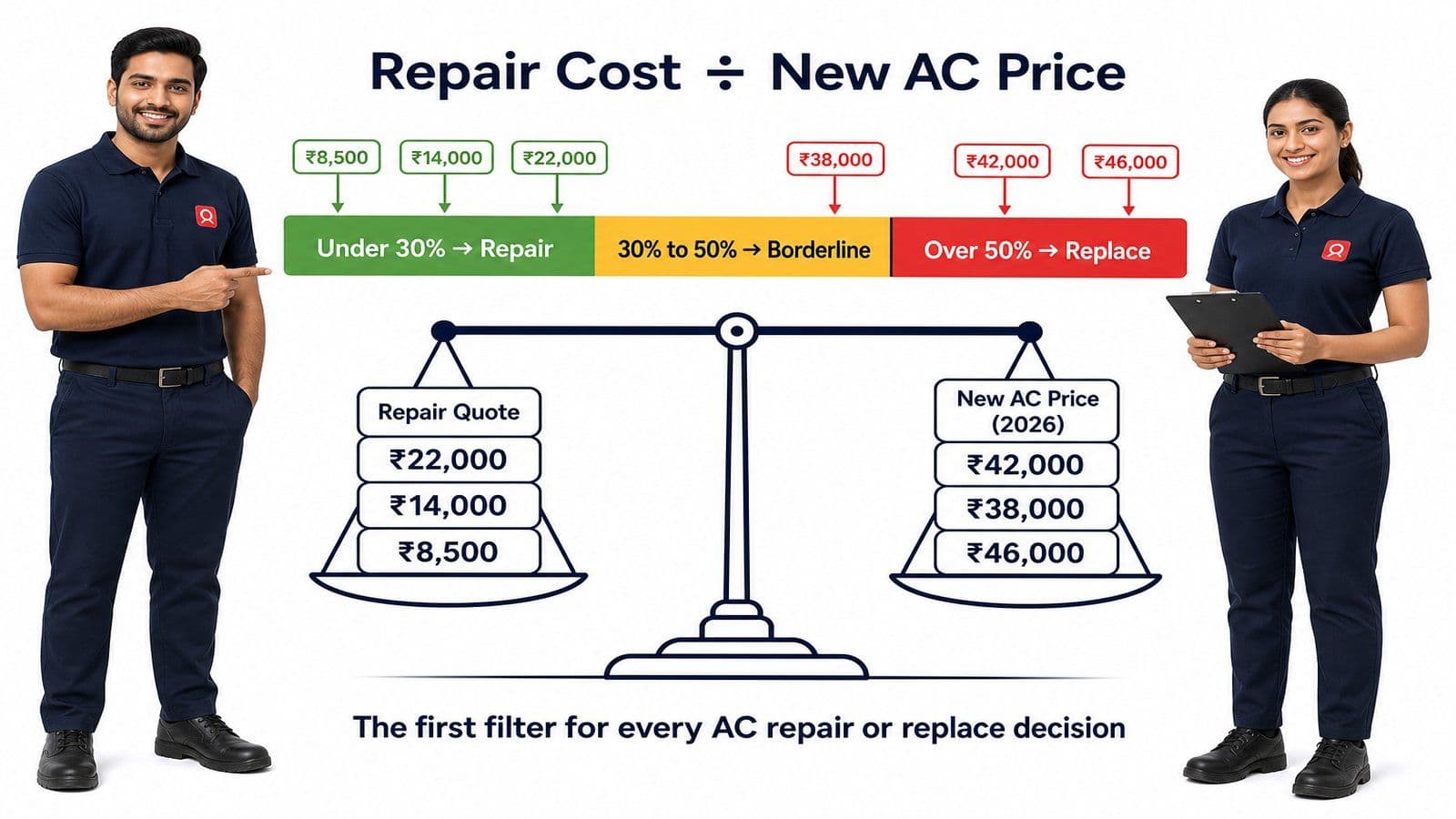
Photo: 50 percent rule visual calculator graphic
Age Threshold
Age is the second filter and often the most clarifying. Indian residential ACs typically deliver useful service for 7 to 12 years, depending on usage hours, servicing cadence, and city air quality. The age threshold framework below cuts through most of the decision noise.
Under 5 Years
Almost always repair, regardless of fault. A 4-year-old AC has 4 to 8 years of life remaining if maintained. Even a compressor failure (the worst common repair) at this age usually justifies replacement because the chassis, PCB, coils, and copper piping still have years of service in them. Compressor under warranty is common up to year 5 on most reputable brands. Always check the warranty card before approving any quote.
5 to 8 Years
The 50 percent rule applies strictly. This is the grey zone where the math actually matters. Run the calculation, factor in star rating gap and refrigerant type, and let the numbers decide. Owners often want to repair out of attachment to the existing unit, but a 7-year-old 3-star non-inverter that needs a ₹15,000 repair is almost always a replace, because the electricity savings from a new 5-star alone pay back the difference inside three summers.
8 to 12 Years
Lean replace. Even if the immediate repair quote passes the 50 percent rule, you are typically buying 12 to 24 months of additional service before the next fault. Compressors, PCBs and capacitors all start failing in cascade from year 9 onwards. The smarter spend is usually to replace once and absorb 8+ years of efficient operation rather than play whack-a-mole with annual repairs.
Over 12 Years
Replace regardless of the quote. At this age, the chassis, coil, drain pan and electrical insulation have all aged. Coastal city units may have lost 40 to 50 percent of their heat-exchange capacity. The unit is also almost certainly running R22 refrigerant, which is being phased out. Continuing to pour money into a unit this old is essentially funding the manufacturer's spare parts business while your electricity bill stays high.
The Six-Factor Decision Matrix
The 50 percent rule and age threshold combine with four other factors to give a complete decision matrix. Here is how our ProNearMe technicians weigh each one.
Factor 1: Repair Cost vs Equivalent New Unit Cost
Already covered above. The 50 percent rule is the headline filter and overrides most other factors when the repair quote is extreme (90 percent or more of new). Below 30 percent of new, repair almost always wins. The middle band of 30 to 60 percent is where the other five factors break the tie.
Factor 2: Age of Unit
Already covered. The age bands above are intentionally wider than some Western references because Indian usage patterns (longer summer hours, harsher dust loads, less consistent servicing) shift the useful-life curve slightly downward.
Get quotes from verified, top-rated AC Service & Repair pros in Delhi.
Factor 3: BEE Star Rating Gap
This is the factor most owners ignore and that most often changes the answer. An 8-year-old 3-star non-inverter consumes roughly 1.8 to 2.1 units of electricity per hour at full load. A current 5-star inverter at the same cooling output consumes 0.9 to 1.2 units per hour. At 6 hours daily for 5 summer months at ₹8 per unit electricity (typical Indian residential slab), the annual electricity gap is real.
| Old Unit | New 5-Star Inverter | Daily Hours | Months of Use | Annual Saving (₹) |
| 8-yr 3-star non-inverter | 5-star inverter | 6 | 5 | 7,200 to 9,600 |
| 10-yr 2-star non-inverter | 5-star inverter | 8 | 6 | 11,500 to 14,400 |
| 6-yr 4-star inverter | 5-star inverter | 6 | 5 | 1,800 to 3,000 |
| 12-yr 3-star window | 5-star split inverter | 7 | 5 | 9,800 to 13,200 |
The Bureau of Energy Efficiency tracks these averages through its labelling programme. The savings above assume modest tariff. In cities with higher residential slabs (parts of Mumbai, Bengaluru, Delhi above 500 unit consumption), savings can be 25 to 35 percent higher.
Factor 4: Refrigerant Phase-Out
The Ministry of Environment, Forest and Climate Change has notified the phase-down of HFCs under India's Kigali Amendment commitments. R22 (HCFC-22), the refrigerant in most pre-2015 ACs, is in active phase-out. Production has stopped and only existing stock is available for top-ups. Through this decade, R22 top-up costs will rise and availability will fall. Any AC older than roughly 2015 likely uses R22 and faces this risk directly.
R410A units (2015 to 2020 vintage) are also entering phase-down in the next 5 to 8 years globally, though they remain serviceable now. R32 (current standard, lower global warming potential) is safe for the medium term. If your repair-or-replace decision is borderline and the existing unit runs R22, the refrigerant factor pushes the decision firmly toward replacement.
Factor 5: Past Repair History
Three major repairs in the past 24 months is a strong replace signal. Compressor, PCB, evaporator coil, and condenser coil are the four major components. If any two of these have failed in the past two years, the third is statistically likely to follow within 12 months. Owners often treat each repair as an isolated event, but our service data shows that units in the late-life failure cascade rarely deliver more than 18 months of stable service between calls.
Factor 6: Warranty Status
A compressor still under warranty fundamentally changes the math. Most reputable brands now offer 5 to 10 year compressor warranties. If the failed component is the compressor and the warranty is live, you pay only labour and gas (₹2,000 to ₹4,500), not the compressor itself (₹8,000 to ₹18,000). Always check the warranty card or buy invoice before agreeing to any quote. PCB and other parts warranties typically expire at 1 or 2 years, so are rarely live by the time the repair-or-replace decision arises.
The warranty crossover catches owners on both sides. At year 8, a brand new AC resets the clock with a 10 year compressor warranty, so your next 8 years of cooling carry near-zero compressor risk. Compare that to fitting a workshop-rebuilt compressor in your old unit with only a 6 month warranty, and the new AC effectively buys you 9.5 extra years of covered protection for roughly ₹25,000 more upfront. That single number flips the decision for around 30 percent of the borderline cases we see.

Photo: Old AC vs new AC technician estimate scene
Hidden Costs People Forget
The headline repair quote and headline new AC price are only part of the picture. Both decisions carry hidden costs that often shift the math 15 to 25 percent in either direction.
Hidden Repair Costs
The biggest one: a gas top-up without a leak fix tends to recur. The Bureau of Indian Standards IS 1391 part 2 explicitly notes that refrigerant losses above the design rate point to a leak, not seasonal degradation. If your technician tops up gas without doing a proper leak test (soap-water bubble test or electronic leak detector), expect to be back in 6 to 18 months for another top-up. Each top-up costs ₹2,500 to ₹4,500. Three top-ups in two years adds up to a partial replacement.
Repaired compressor warranties are usually 6 months only. New compressor warranties from the OEM run 5 to 10 years. If a third-party rebuilt compressor is fitted, the typical workshop warranty is 6 months. Anything beyond that is on you.
Hidden Replacement Costs
New AC installation: ₹1,500 to ₹4,000 depending on tonnage and city. Often quoted separately from the unit price.
New copper piping if the run length differs from the old installation: ₹350 to ₹600 per metre, typical home needs 3 to 6 metres extra. That is ₹1,500 to ₹3,500 added.
Bracket replacement: ₹600 to ₹1,500 if the old bracket is rusted or the new unit weight differs.
Society or RWA approval and any minor wall patching: usually free but can stall installation by 7 to 10 days if not arranged in advance.
Stabiliser if not already installed: ₹2,500 to ₹4,500. Highly recommended for any inverter AC and often required for warranty.
Typical 2026 New AC Prices
The table below reflects May 2026 retail pricing across major Indian e-commerce and offline retailers, including installation but excluding stabiliser. These are illustrative bands, not specific brand quotes.
| Tonnage | Star Rating | Tier | Installed Price (₹) |
| 1 ton | 3-star non-inverter | Entry | 26,000 to 31,000 |
| 1 ton | 5-star inverter | Mid | 34,000 to 40,000 |
| 1 ton | 5-star inverter | Premium | 42,000 to 50,000 |
| 1.5 ton | 3-star non-inverter | Entry | 30,000 to 35,000 |
| 1.5 ton | 5-star inverter | Mid | 38,000 to 46,000 |
| 1.5 ton | 5-star inverter | Premium | 48,000 to 60,000 |
| 2 ton | 3-star non-inverter | Entry | 38,000 to 44,000 |
| 2 ton | 5-star inverter | Mid | 48,000 to 58,000 |
| 2 ton | 5-star inverter | Premium | 62,000 to 78,000 |
Window AC prices typically run 15 to 25 percent below the equivalent split AC. Cassette and ducted units sit at the premium end and are uncommon in residential decisions.
Get quotes from verified, top-rated AC Service & Repair pros in Delhi.
Resale and Scrap Value of Old AC
When you replace, the old unit has some recoverable value. Working units in reasonable cosmetic condition fetch ₹4,000 to ₹8,000 from second-hand dealers or via OLX-style listings. Non-working units go to scrap dealers for copper recovery, typically ₹2,000 to ₹4,000 depending on tonnage and copper coil condition.
If the compressor is still good (a working unit that needs only minor repair, sold off as functional), the upper end is achievable. If the compressor is dead, copper recovery alone is the price floor. Coastal city units with heavy corrosion fetch the lower end.
Always insist the scrap dealer removes the unit professionally, with the refrigerant evacuated rather than vented. The Ozone Depleting Substances Rules under MoEF&CC require proper refrigerant recovery, and a venting scrap dealer is breaking the law. NSDC-certified technicians charge ₹500 to ₹900 for proper evacuation.
Refurbished or Second-Hand AC
A common middle path: sell the broken unit, buy a refurbished one for ₹12,000 to ₹18,000, skip the full replacement cost. Tempting, especially in the 5 to 8 year age zone where the math is borderline.
The honest assessment from our network: refurbished ACs carry real risk. Gas leaks within 6 months show up in roughly 30 percent of resold units in our service data. PCB and capacitor failures within the first year add another 15 to 20 percent. Refurbished sellers rarely offer warranties beyond 6 months for gas and 3 months for parts.
If you do go refurbished, three rules: insist on a 6-month written gas warranty, get the unit tested at your home before payment (don't trust shop floor demos), and budget for one full service plus filter and coil clean immediately after installation. That is roughly ₹1,500 to ₹2,400 on top of the purchase price.
We get called to inspect refurbished AC installations almost weekly. The pattern is consistent. The unit cools beautifully for the first 8 to 12 weeks, then loses gas in the second summer. The original leak was never fixed during refurbishment, only topped up. Always insist on a refurbisher who shows you a written leak test report, not just a cooling demonstration.
For related context on common faults that drive these decisions, see our cluster guides on AC compressor problems, AC not cooling troubleshooting, and AC tripping the circuit breaker.
Replace-Then-Sell Payback Math
The full replace-then-sell scenario, end to end, looks like this for a typical Mumbai household in 2026.
Starting position: 8-year-old 1.5 ton 3-star non-inverter, working but inefficient, repair quote of ₹14,000 for a refrigerant leak fix plus capacitor.
Replace decision math:
- Sell old unit working: ₹5,500
- Buy new 1.5 ton 5-star inverter installed: ₹42,000
- Net cash outflow: ₹36,500
- Skip the repair: save ₹14,000 against the replacement
- Net adjusted outflow: ₹22,500
- Annual electricity saving: ₹8,400 (at 6 hours daily, 5 months, ₹8 per unit)
- Payback period: 22,500 divided by 8,400 = 2.7 years
- Useful life of new unit: 8 to 12 years
After payback, the household saves ₹8,400 every year for 5 to 9 more years, totalling ₹42,000 to ₹75,600 in pure electricity savings on top of avoiding repeat repairs on the old unit. The replacement essentially pays for itself by year three and then funds itself going forward.
The math obviously varies by city, tariff, hours of use, and the specific old and new units. But this pattern (3 to 4 year payback when replacing an 8-year-old 3-star with a current 5-star inverter at typical Indian usage) holds in the majority of our customer cases.

Photo: Old 3-star vs new 5-star inverter electricity savings chart
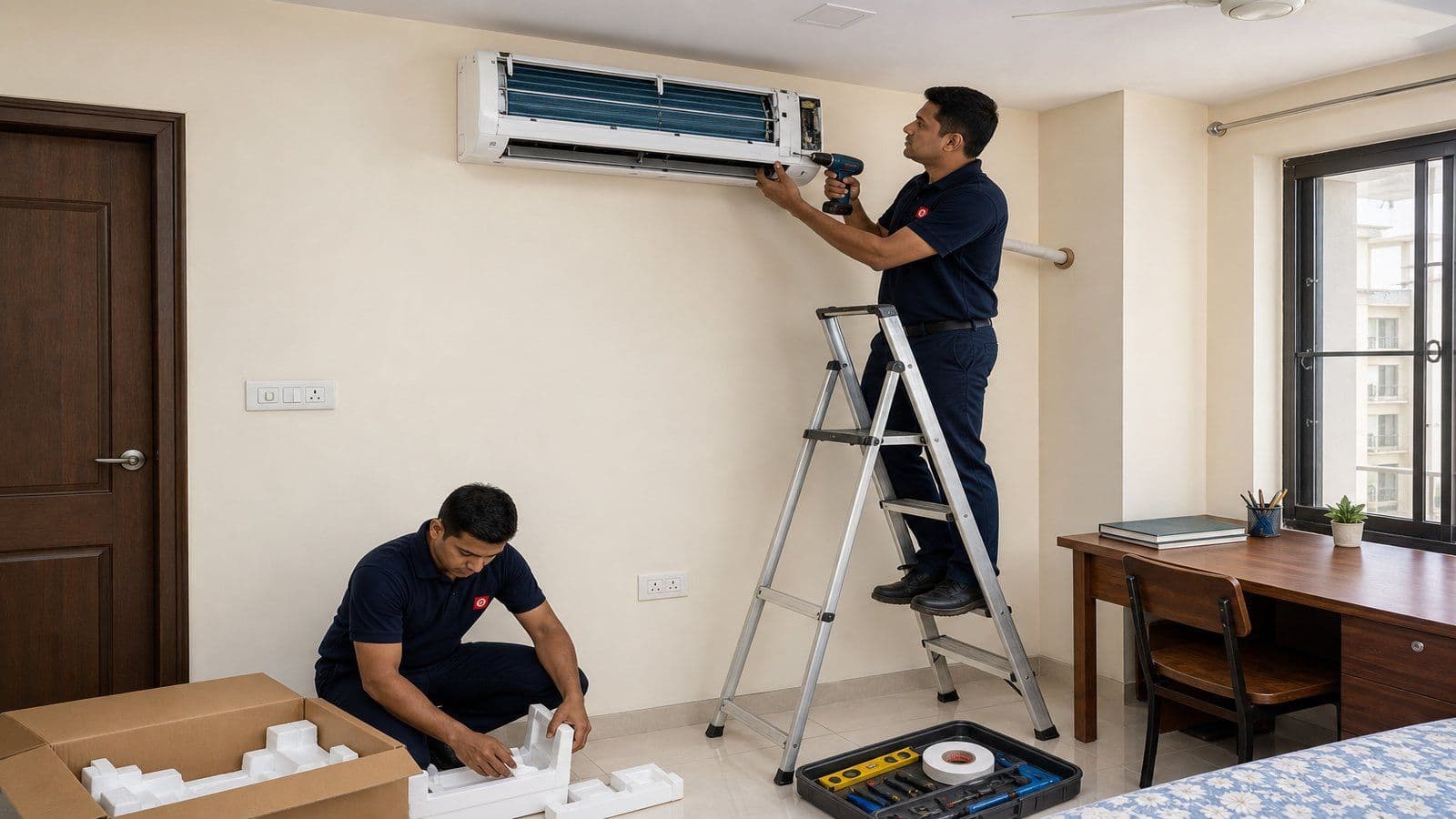
Photo: New AC installation in progress in Indian flat
When Repair Is Clearly the Right Call
To balance the replacement bias of this article, here are the scenarios where repair almost always wins regardless of any quote math.
The unit is under 5 years old, full stop. Even a major component failure justifies repair at this age because the remaining chassis life is long and the part likely carries some warranty cover.
The compressor is in warranty. Pay labour and gas only, total ₹2,500 to ₹4,500, walk away with another 5+ years of service. Unbeatable value.
The fault is electrical only: capacitor, contactor, MCB, thermistor, PCB sensor. These are all under ₹3,500 fixes and address discrete components that have no spillover risk to the rest of the unit.
The fault is drainage or fan-related: blower wheel, drain pan, drain pipe, fan blade. Mechanical wear items, ₹500 to ₹2,800 fixes, easy repairs.
The refrigerant leak is at a clearly fixable joint (flare nut, service valve), not on the coil itself. A coil leak is a major repair and shifts the math. A joint leak is ₹800 to ₹1,500.
For related guides on these specific repair scenarios, see AC water leakage causes and fixes, AC making loud noise diagnosis, and AC remote not working troubleshooting.
When Replacement Is the Only Sane Call
The compressor has failed on a unit over 8 years old. The new compressor alone is ₹8,000 to ₹18,000, plus labour and gas, taking the quote to ₹22,000 plus. Almost always over 50 percent of new equivalent.
The unit has had two or more major repairs in the past 24 months. You are in the late-life failure cascade and the next call is months away.
The unit runs R22 refrigerant and needs a refrigerant top-up. R22 cost has more than doubled in five years and availability is dropping. Every top-up costs more than the last.
The coil (evaporator or condenser) needs replacement. Coil replacement on a split AC is ₹6,500 to ₹14,000 and at any age over 5 years rarely justifies the spend versus a new unit.
Coastal city corrosion has eaten through the outdoor coil fins visibly. Once visible corrosion is on the fins, heat exchange efficiency has dropped 25 to 40 percent and no surface treatment recovers it.
Conclusion
The ac repair or replace decision is rarely as emotional as owners make it. The 50 percent rule, age threshold, star rating gap, refrigerant type, repair history and warranty status combine into a six-factor matrix that gives a clear answer in 80 percent of cases. The middle 20 percent, where the math is borderline, is where talking to a NSDC-certified technician and getting two independent quotes pays off.
The honest pattern across our ProNearMe network: most owners over-repair, not over-replace. The attachment to a working unit that "just needs one more fix" leads to chains of ₹5,000 and ₹8,000 repairs that add up to a partial new AC over 24 months, plus high electricity bills throughout. Running the numbers once, cleanly, against today's new AC prices and your actual electricity usage usually reveals replacement as the smarter spend by year three. For a detailed cost framework before you commit either way, see our companion guide on AC repair cost breakdown for India 2026.
Disclaimer
All price ranges in this guide are typical May 2026 figures for major Indian metros and include 18 percent GST unless stated. Actual prices vary by city, brand, model, and the specific technician or retailer. Electricity savings estimates assume Bureau of Energy Efficiency labelled units at typical Indian residential tariffs and usage hours. Real savings depend on your specific tariff slab, usage pattern, and old versus new unit specifications. We strongly recommend engaging only NSDC-certified technicians, ideally through a verified ProNearMe network centre, for any refrigerant handling, electrical work, or compressor diagnosis. ProNearMe does not endorse any specific AC brand and the framework in this guide applies across manufacturers.
Sources & References
- Bureau of Energy Efficiency Air Conditioner Standards and Labelling Programme
- Ministry of Environment, Forest and Climate Change Ozone Depleting Substances Rules and Kigali Amendment Implementation
- Bureau of Indian Standards IS 1391 Part 2 Specification for Room Air Conditioners
- National Skill Development Corporation HVAC Technician Qualification Pack
- Press Information Bureau Advisory on Energy Efficient Air Conditioning
- Indian Society of Heating, Refrigerating and Air Conditioning Engineers Residential HVAC Guidelines
- Central Electricity Authority Wiring and Safety Regulations for Domestic Installations
- Ministry of Power National Programme on Energy Efficiency
Amit worked as an AC technician for 6 years in Ahmedabad before transitioning to technical writing. He holds a diploma in Refrigeration and Air Conditioning from ITI Ahmedabad and understands the difference between what AC companies promise and what actually happens on the ground. His articles break down complex technical topics into plain language that any homeowner can follow. He tests every tip he writes about in his own home first.

Dr. Verma is a mechanical engineer with 15 years of experience in HVAC systems. She completed her PhD from IIT Delhi on energy-efficient cooling solutions for Indian residential buildings. She reviews all technical content on HomePros to make sure the numbers are right, the advice is safe, and the recommendations are backed by actual engineering principles. She consults for multiple AC manufacturers on product design.